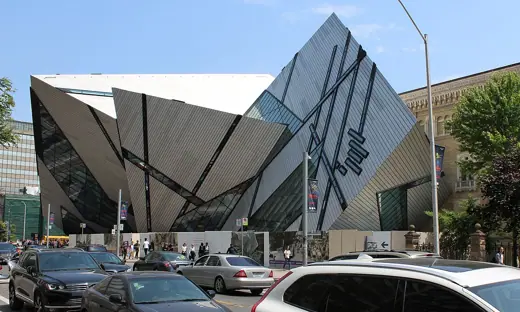
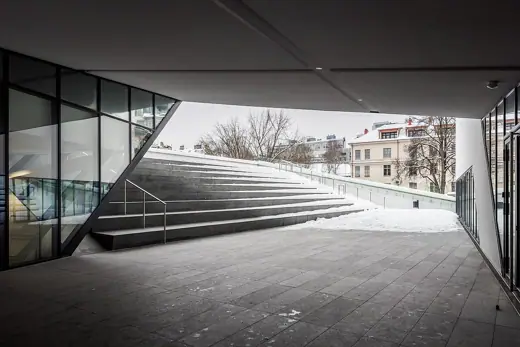
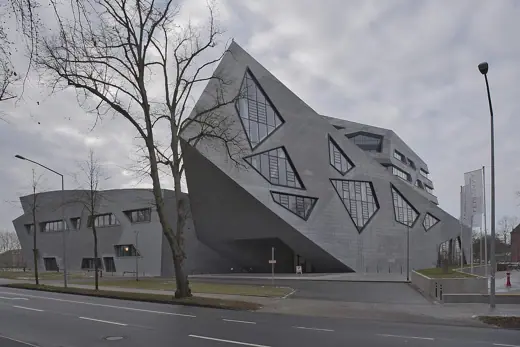
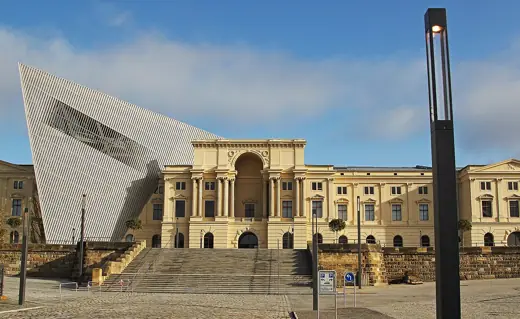
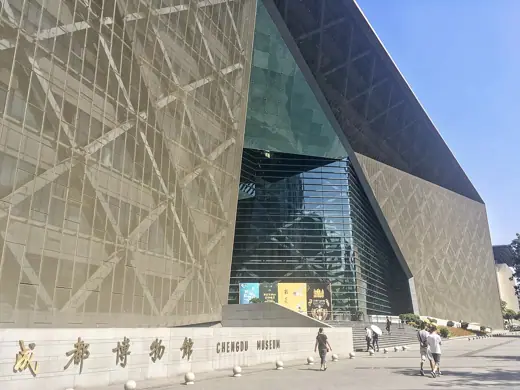
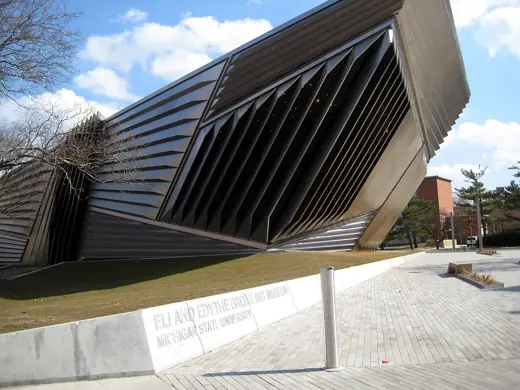
1/6 · Exterior · 2.Extension of Royal Ontario Museum, TorontoPhoto: Sarbjit Bahga · CC BY-SA 4.0 · source2/6 · Exterior · 10.Extension of Royal Ontario Museum, TorontoPhoto: Sarbjit Bahga · CC BY-SA 4.0 · source3/6 · Exterior · Royal Ontario Museum in Fall 2021Photo: Maksim Sokolov (Maxergon) · CC BY-SA 4.0 · source4/6 · Exterior · Toronto: Royal Ontario MuseumPhoto: – Wladyslaw [Disk.] · CC BY-SA 3.0 · source5/6 · Interior · Royal Ontario MuseumPhoto: stu_spivack · CC BY-SA 2.0 · source6/6 · DetailPhoto: Rick Ligthelm from Rotterdam, The Netherlands · CC BY 2.0 · source
Key featuresFive interlocking prisms of glass and aluminium burst out of the old museum's front onto Bloor Street.
About the building
The Michael Lee-Chin Crystal, a deconstructivist, crystalline structure, is the centrepiece of the Royal Ontario Museum's expansion in Toronto. In an international competition, Daniel Libeskind's design was selected from 50 finalists. Opened in 2007, the Crystal replaced the Queen Elizabeth II Terrace Galleries and gave the museum a new entrance with sliding doors on Bloor Street. Its tilted walls stop before the older heritage buildings, and the envelope is closed between the new shape and the old walls. A three-storey atrium, the Hyacinth Gloria Chen Crystal Court, serves as the main lobby. Inside are seven further galleries, a cafeteria, a gift shop and the largest temporary exhibition hall of any museum in Canada. It recalls other Libeskind works, above all Berlin's Jewish Museum. It drew controversy, and reports in October 2007 said it was leaking badly.
About Michael Lee-Chin Crystal, Royal Ontario Museum
The Royal Ontario Museum (ROM) is a museum of art, world culture and natural history in Toronto, Ontario, Canada. It is one of the largest museums in North America and the largest museum in Canada. It attracts more than one million visitors every year, making it the most-visited museum in Canada. The 74,000-square-metre (800,000-square-foot) museum building is located north of Queen's Park, in the University district, with its main entrance on Bloor Street West. Museum subway station is named after it and, since a 2008 renovation, is decorated to resemble the ROM's collection at the platform level; Museum station's northwestern entrance directly serves the museum.
Established on April 16, 1912, and opened on March 19, 1914, the ROM has maintained close relations with the University of Toronto throughout its history, often sharing expertise and resources. It was under direct control and management of the University of Toronto until 1968, when it became an independent Crown agency of the Government of Ontario. It is Canada's largest field-research institution, with research and conservation activities worldwide.