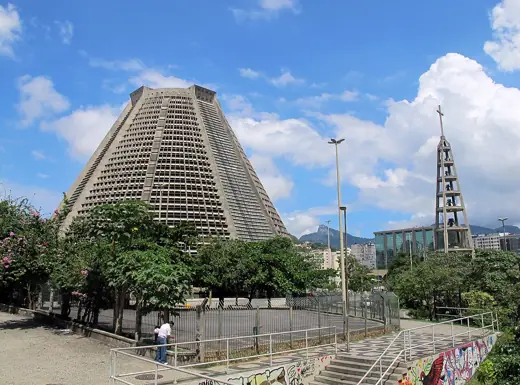
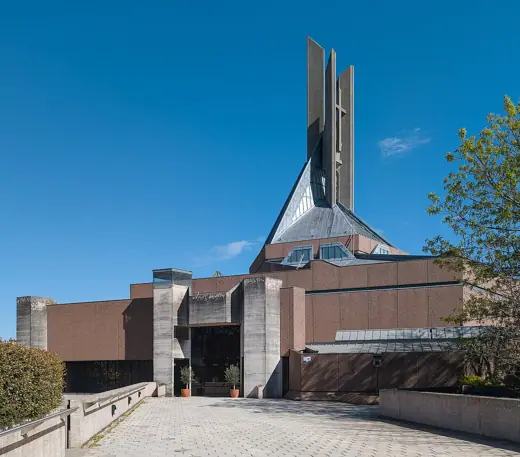
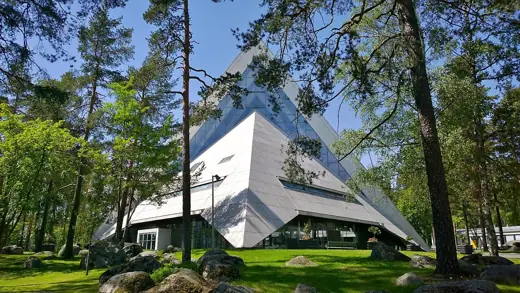
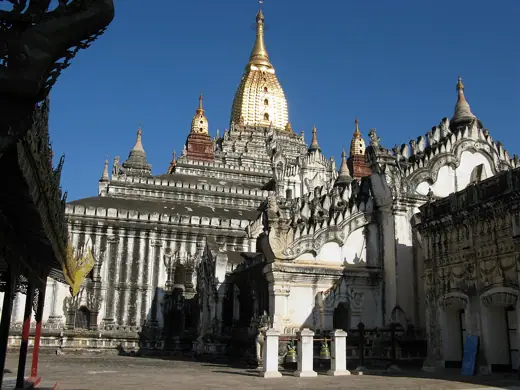
1/6 · ExteriorPhoto: Haakon S. Krohn · CC BY-SA 3.0 · source2/6 · Exterior · Cathedral of Saint Sebastian in Rio de JaneiroPhoto: Rjcastillo · CC BY 4.0 · source3/6 · ExteriorPhoto: Photograph by Mike Peel ( www.mikepeel.net ) · CC BY-SA 4.0 · source4/6 · ExteriorPhoto: Photograph by Mike Peel ( www.mikepeel.net ) · CC BY-SA 4.0 · source5/6 · Interior · Greek Cross, Interior Metropolitan Cathedral of Rio de JaneiroPhoto: Rjcastillo · CC BY 4.0 · source6/6 · Interior · Interior Metropolitan Cathedral of Rio de JaneiroPhoto: Rjcastillo · CC BY 4.0 · source
Key featuresTruncated concrete cone with four floor-to-apex stained-glass strips meeting in a cross.
About the building
Rio de Janeiro's cathedral is dedicated to the city's patron saint, Saint Sebastian. Edgar de Oliveira da Fonseca gave it a modern design that takes its cue from Mayan pyramids. Built from 1964 to 1979, it took over as seat of the Archdiocese from a series of churches used as cathedrals since 1676, the last and best known being the 18th-century Church of Our Lady of Mount Carmel of the Ancient See, now called the Old Cathedral. The building is a cone 75 metres high, measuring 96 metres across inside and 106 metres outside. Its interior covers 8,000 square metres, with 5,000 seats and standing room for 20,000. Four straight-edged stained glass windows run 64 metres from floor to ceiling.
The Metropolitan Cathedral of Saint Sebastian (Portuguese: Catedral Metropolitana de São Sebastião), better known as the Metropolitan Cathedral of Rio de Janeiro (Catedral Metropolitana do Rio de Janeiro) or as the Cathedral of St. Sebastian of Rio de Janeiro (Catedral de São Sebastião do Rio de Janeiro), is a cathedral of the Catholic Church and the seat of the Archdiocese of Rio de Janeiro. The cathedral is home to the cathedra of the Archbishops of the city of Rio de Janeiro, Brazil. The church is dedicated to Saint Sebastian, the patron saint of Rio de Janeiro.
The cathedral was designed by Edgar de Oliveira da Fonseca in a modern style based on Mayan architectural style of pyramids. The current cathedral was built between 1964 and 1979 and replaced as seat of the Archdiocese a series of churches that had served as cathedrals since 1676, the most recent and notable of those being the Church of Our Lady of Mount Carmel of the Ancient See, now known as the Old Cathedral, built in the 18th century, and that had been declared Rio's cathedral in the early 19th century.