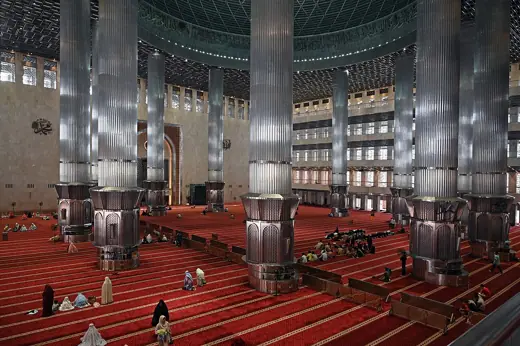
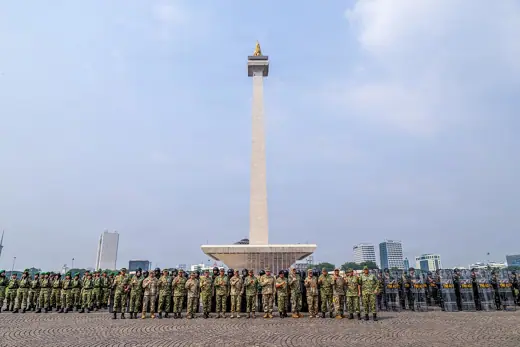
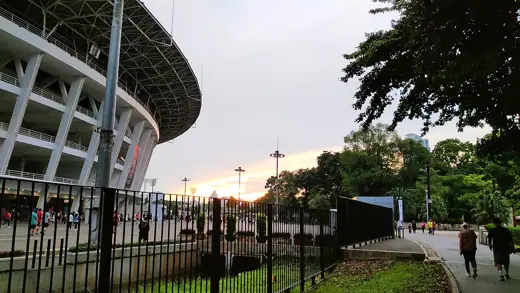
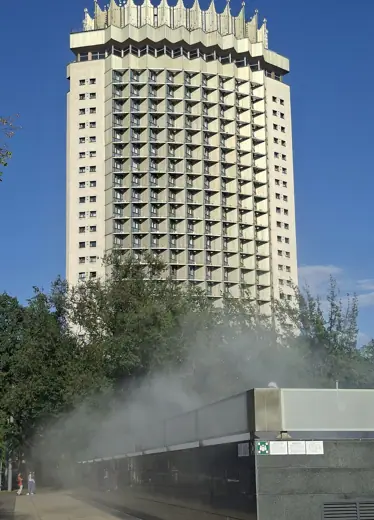
1/4 · Interior · Interior, Istiqlal Mosque in Jakarta, IndonesiaPhoto: P. Hughes · CC BY 4.0 · source2/4 · Exterior · View to the northeast from Monas in Jakarta, with the Istiqlal MosquePhoto: Christophe95 · CC BY-SA 4.0 · source3/4 · Exterior · Ablution fountain Istiqlal Mosque JakartaPhoto: Aisha Tanduk · CC BY-SA 4.0 · source4/4 · Interior · Dome and Chandelier Istiqlal Mosque JakartaPhoto: Aisha Tanduk · CC BY-SA 4.0 · source
Portrait: Ir. Doli Nainggolan SH · CC BY-SA 4.0 · source
About Istiqlal Mosque
Istiqlal Mosque (Indonesian: Masjid Istiqlal, lit. 'Independence Mosque'; Arabic: مَسْجِد ٱلْإِسْتِقْلَال, romanized: Masjid al-Istiqlāl, lit. 'Mosque of the Independence') in Jakarta, Indonesia is the largest mosque in Southeast Asia and the ninth largest mosque in the world in terms of worshipper capacity. Built to commemorate Indonesian independence, this national mosque of Indonesia was named "Istiqlal", an Arabic word for "independence". The mosque was opened to the public on 22 February 1978. Within Jakarta, the mosque is positioned next to Merdeka Square, the Jakarta Cathedral (Catholic), and also of the Immanuel Church (Reformed).
The mosque has seven entrances, and all seven gates are named after Al-Asmaul-Husna, the names of God in Islam. The number seven represents the Seven Heavens in Islamic cosmology. The wudu (ablution) fountains are on the ground floor, while the main prayer hall and main courtyard are on the first floor. The building consists of two connected rectangular structures: the main structure and the smaller secondary structure. The smaller one serves as a main gate as well as stairs and prayer spaces.