




Culture & sport · Modernism
Helsinki Olympic Stadium
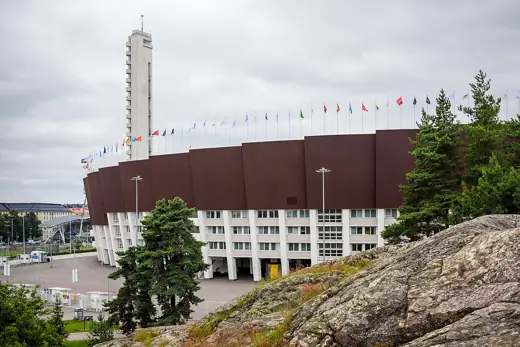
Key featuresWhite functionalist stadium with a 72.71 m tower, the length of the 1932 Olympic javelin win.
About the building
The Helsinki Olympic Stadium, about 2.3 kilometres from the city centre in Töölö, is the largest stadium in Finland. Yrjö Lindegren and Toivo Jäntti designed it in the functionalist style, and Architectural Digest has featured it among the finest Olympic buildings. Construction ran from 1934 to 1938, ahead of the 1940 Summer Olympics, which had been moved from Tokyo to Helsinki and were then cancelled because of the Second World War. The stadium hosted the 1952 Games instead, when temporary additions to the upper tier of three stands lifted its capacity above 70,000; today it holds 36,251. Its 72.71-metre tower matches the length of Matti Järvinen's gold-medal javelin throw at the 1932 Olympics. A renovation roofed every stand with canopies, renewed the field and track, and added restaurants and indoor sports space, and the stadium reopened in September 2020.
Sources: Helsinki Olympic Stadium · Yrjö Lindegren (Wikipedia)
More with monumentalityAll 909 →

Find more with
Monumentality909 buildings →Geometry1061 buildings →Public space617 buildings →Culture & sport614 buildings →Each opens every building that shares the idea.
Details
- Architect
- Yrjö Lindegren, Toivo Jäntti
- Place
- Helsinki, Finland
- Year
- 1938
- Typology
- Culture & sport
- Movement
- Modernism
- Region
- Europe

Go deeper





More · Culture & sportAll 614 →
Portrait: Unknown author · Public domain · source