




Palace · Historic precedent
Hawa Mahal
Key featuresFive-storey pyramid of red and pink sandstone with 953 small latticed jharokha windows.
About the building
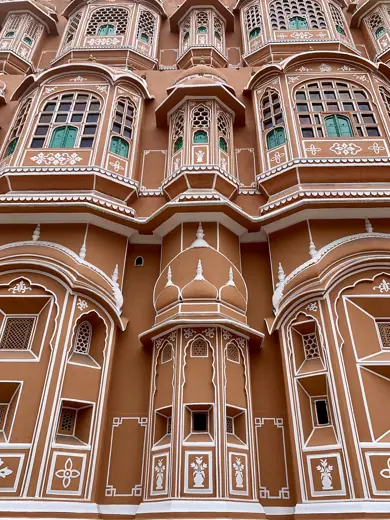
Maharaja Sawai Pratap Singh built the Hawa Mahal, the "Palace of Winds", in Jaipur in 1799, to a design by Lal Chand Ustad. Made of red and pink sandstone, it sits at the edge of the City Palace and reaches into the zenana, the women's quarters. The palace is a five-storey pyramid about 50 feet (15 m) high, and its exterior resembles a honeycomb, with 953 small jharokha windows decorated with fine latticework. The screens let royal women watch street life and festivals below without being seen, and they also let cool air through by the Venturi effect, easing summer heat. Domed canopies, fluted pillars and lotus and floral patterns come from Rajput building, the stone inlay filigree and arches from Mughal work. The face seen from the street, often taken for the front, is in fact the back.
Sources: Hawa Mahal (Wikipedia)
More with facade as skinAll 828 →

Find more with
Facade as skin828 buildings →Climate response258 buildings →Geometry1061 buildings →Palace44 buildings →Each opens every building that shares the idea.
Details
- Architect
- Lal Chand Ustad
- Place
- Jaipur, India
- Year
- 1799
- Typology
- Palace
- Movement
- Historic precedent
- Region
- South Asia





