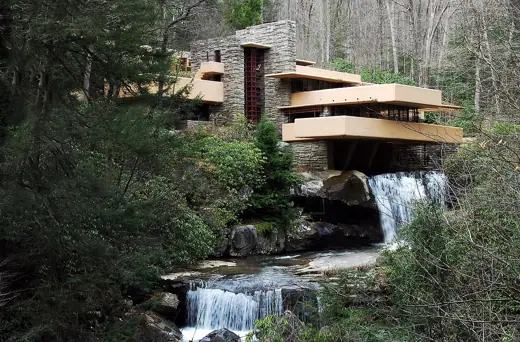
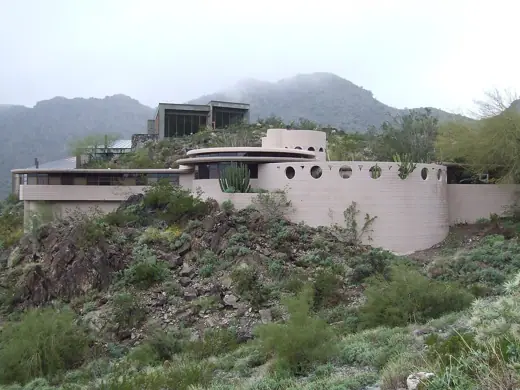
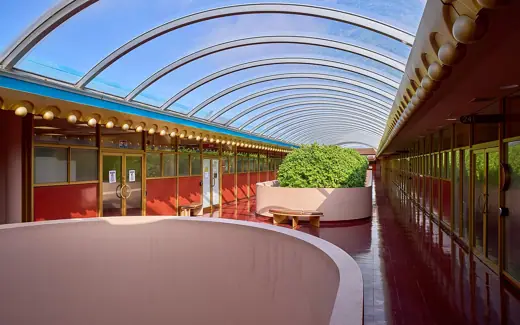
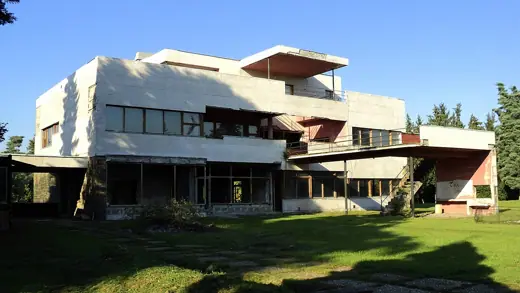
1/10 · Exterior · Fallingwater at Mill Run, PennsylvaniaPhoto: lachrimae72 · CC0 · source2/10 · Exterior · Fallingwater (Kaufmann Residence) by Frank Lloyd WrightPhoto: Daderot · CC0 · source3/10 · ExteriorPhoto: Ruhrfisch · CC BY-SA 3.0 · source4/10 · Interior · Fallingwater - obývací pokoj včetně původního vybaveníPhoto: Sakul9 · CC BY-SA 4.0 · source5/10 · Interior · Fallingwater - obývací pokoj včetně původního vybaveníPhoto: Sakul9 · CC BY-SA 4.0 · source6/10 · Detail · Fallingwater - obývací pokoj včetně původního vybaveníPhoto: Sakul9 · CC BY-SA 4.0 · source7/10 · ContextPhoto: Joshua G Chang · CC BY-SA 4.0 · source8/10 · Plan · A floor plan of the innovative, lloyd-wright house, FallingwaterPhoto: Arsenalbubs · CC0 · source9/10 · Model · A miniature replica of the Fallingwater building at MRRV, Carnegie Science Center in PittsburghPhoto: Raunaq Gupta · CC BY-SA 3.0 · sourcePhotos unavailable10/10Sailko · CC BY 3.0 · source
Fallingwater is a house museum in Stewart Township in the Laurel Highlands of southwestern Pennsylvania, United States. Designed by the architect Frank Lloyd Wright, it is built partly over a waterfall on the Bear Run stream. The three-story residence was developed as a weekend retreat for Edgar J. Kaufmann Sr., the owner of Kaufmann's Department Store in Pittsburgh, and his wife Liliane. The Western Pennsylvania Conservancy (WPC), which has operated Fallingwater as a tourist attraction since 1963, maintains 5,000 acres (2,000 ha) surrounding the house.
Fallingwater has been described as an example of Wright's organic architecture. Though the house is also sometimes described as a Modern-styled building, The Wall Street Journal wrote that the design was "a kind of streamlined, handmade, organic architecture" not emulated by other architects. The site's natural setting may have been inspired by Japanese architecture, a style Wright liked. Fallingwater's design shares elements with Wright's earlier Prairie houses and his later Usonian houses. Elements such as trellises are derived from Italian architecture, while the kitchen is inspired by New England colonial architecture. Wright's design for the facade also shares similarities with an unbuilt villa designed by Mies van der Rohe, and the cantilevers resemble those in three structures designed by Rudolph Schindler.