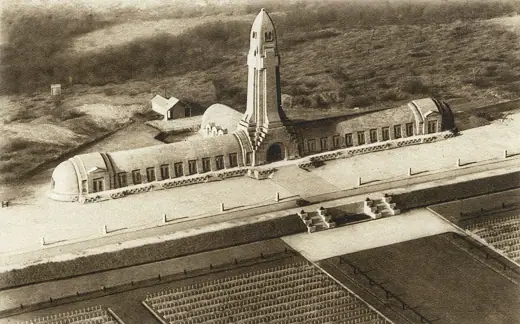
1/6 · ExteriorPhoto: https://galeries.limedia.fr/ark:/31124/dkkg4vm8fqg1lvjp/ · Public domain · source2/6 · Exterior · The cemetery with Douaumont ossuary ( Verdun ), France (Meuse)Photo: Jean-Pol GRANDMONT · CC BY-SA 3.0 · source3/6 · Exterior · Douaumont Ossuary (frPhoto: Lukas Lober · CC BY-SA 4.0 · source4/6 · Interior · Interior of the Ossuary, Douaumont, Départment of Meuse, Region of Lorraine (now Grand Est), FrancePhoto: Zairon · CC BY-SA 4.0 · source5/6 · Interior · Interior of the Ossuary, Douaumont, Départment of Meuse, Region of Lorraine (now Grand Est), FrancePhoto: Zairon · CC BY-SA 4.0 · source6/6 · Interior · Chapel of the Ossuary, Douaumont, Départment of Meuse, Region of Lorraine (now Grand Est), FrancePhoto: Zairon · CC BY-SA 4.0 · source
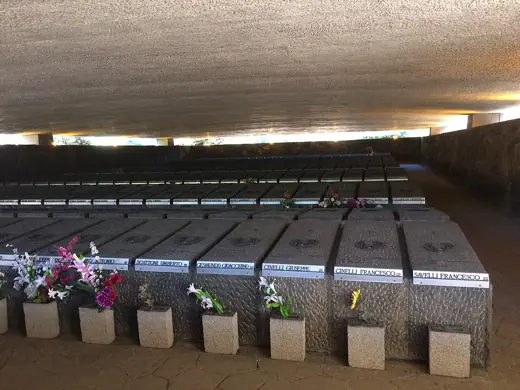
The Douaumont Ossuary (French: Ossuaire de Douaumont) is a memorial containing the skeletal remains of soldiers who died on the battlefield during the Battle of Verdun in World War I. It is located in Douaumont-Vaux, France, within the Verdun battlefield, and immediately next to the Fleury-devant-Douaumont National Necropolis. It was built on the initiative of Charles Ginisty, Bishop of Verdun.
The architects of the ossuary were Léon Azéma, Max Edrei, and Jacques Hardy. George Desvallières designed the stained glass windows. The tower is 46 meters (151 ft) high and has a panoramic view of the battlefields. The tower contains a bronze death-bell, weighing over 2 tonnes (2.0 long tons; 2.2 short tons), called Bourdon de la Victoire, which is sounded at official ceremonies. It was offered by an American benefactor, Anne Thornburn Van Buren, in 1927. At the top of the tower is a rotating red and white "lantern of the dead", which shines on the battlefields at night. The cloister is 137 meters (449 ft) long and contains 42 interior alcoves.