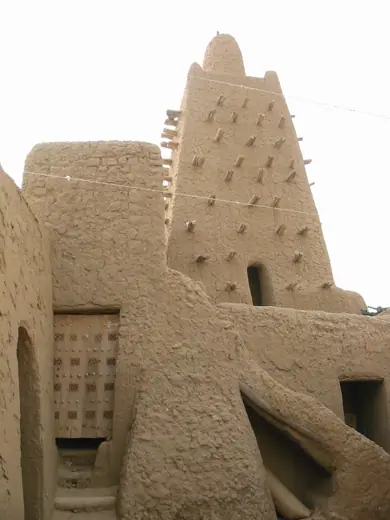
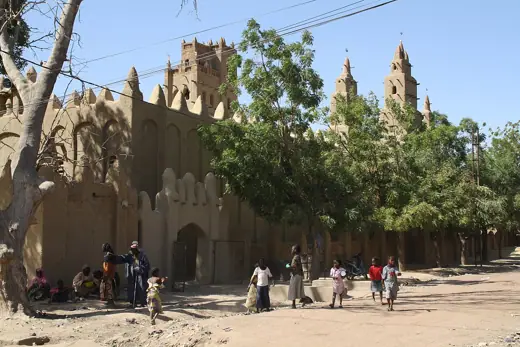
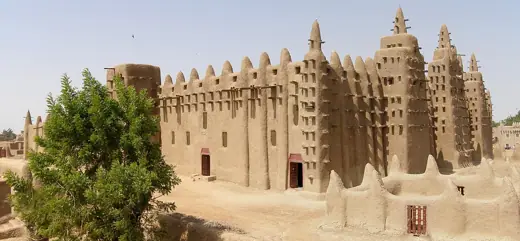
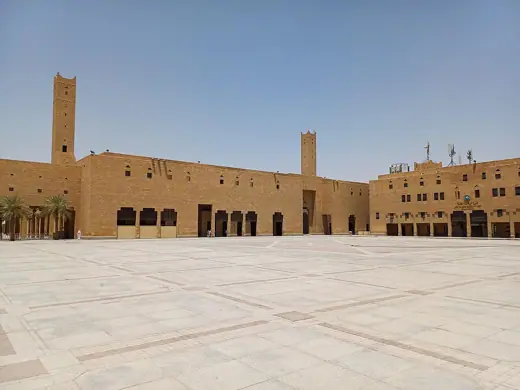
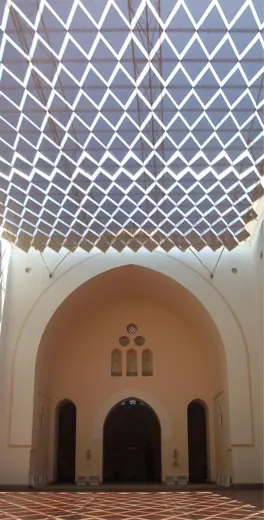
1/7 · Exterior · Cour de la mosquée de Djingareiber, TombouctouPhoto: KaTeznik · CC BY-SA 2.0 fr · source2/7 · Exterior · Djinguereber Mosque, TimbuktuPhoto: upyernoz from Haverford, USA · CC BY 2.0 · source3/7 · Exterior · Djinguereber Mosque, Timbuktu, the oldest mosque in the cityPhoto: upyernoz · CC BY 2.0 · source4/7 · Exterior · Djinguereber Mosque is one of three ancient centers of learning located in Timbuktu, Mali, AfricaPhoto: Dr. Ondřej Havelka (cestovatel) · CC BY-SA 4.0 · source5/7 · DetailCC BY-SA 3.0 · source6/7 · Context · A burning bread oven with the tower (minaret) of the Djinguereber mosque in the backgroundPhoto: Angeline A. van Achterberg · CC BY-SA 4.0 · source7/7 · PlanPhoto: Rijksmuseum · CC0 · source
The Djinguereber Mosque (Arabic: مسجد دجينجيربر; French: Mosquée de Djinguereber; from Koyra Chiini jiŋgar-ey beer 'grand mosque'), also known as Djingareyber or Djingarey Ber, is a famous learning center in Timbuktu, Mali. Built in 1327, it is one of three mosques associated with the historical community of scholars and students known today as the "University of Timbuktu". It was inscribed on the list of UNESCO World Heritage Sites in 1988.
The design and construction of the Djinguereber mosque is traditionally credited to the Andalusi scholar Abu Ishaq Al Sahili. According to Ibn Khaldun, one of the best-known sources on 14th-century Mali, he was said to have received 12,000 mithkals of gold dust for the work. More recent analyses reject this version, demonstrating that the architectural style of the Djinguereber Mosque and others in West Africa derives mainly from mosques in the Sahara and traditional African architecture and religions, so that al-Sahili's influence on West African architecture is treated as a myth.