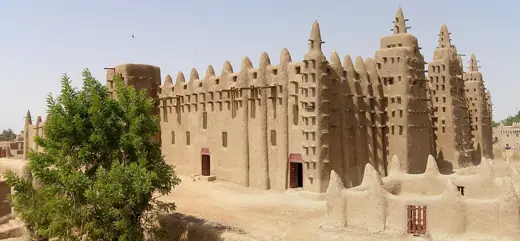
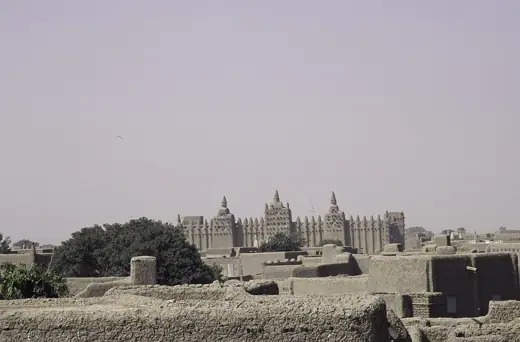
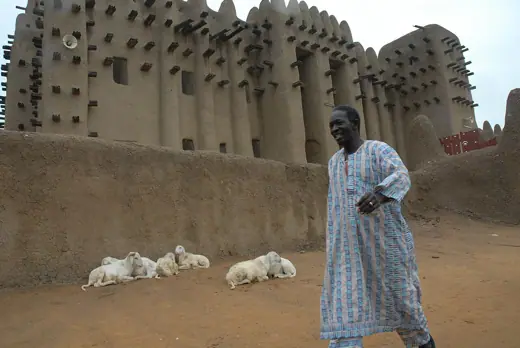
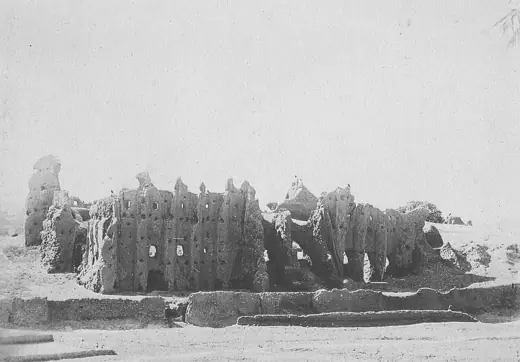
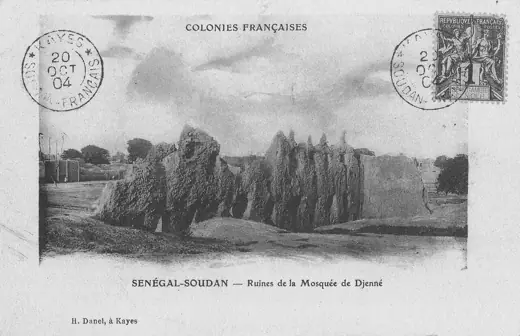
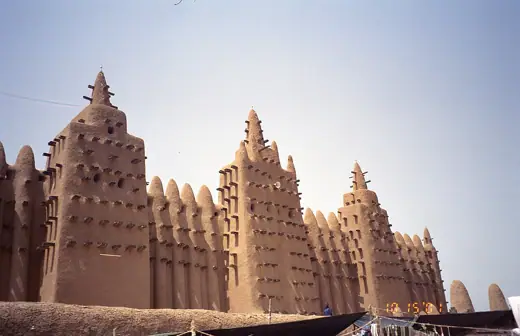
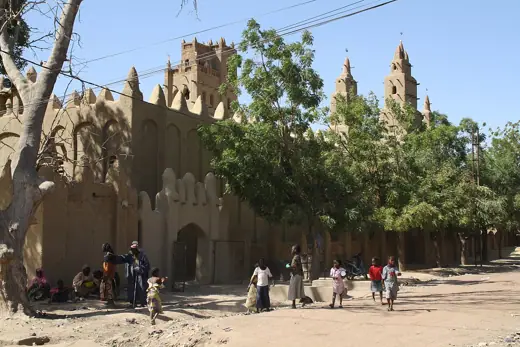
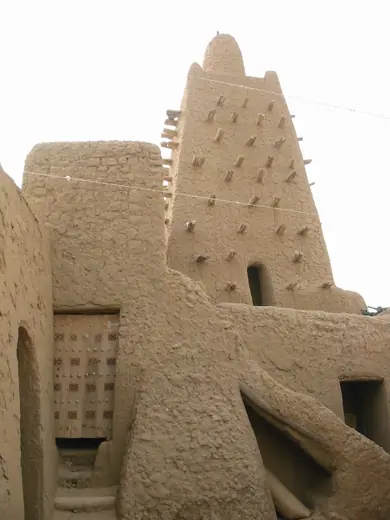
1/6 · Exterior · Great Mosque of Djenné , en:Djenné , MaliPhoto: BluesyPete · CC BY-SA 3.0 · source2/6 · Exterior · The mosque of Djenné with three broad minarets in one sidePhoto: Angeline A. van Achterberg · CC BY-SA 4.0 · source3/6 · ExteriorPhoto: Emilio Labrador from Davie (South Florida), USA · CC BY 2.0 · source4/6 · Exterior · Ruins of the ancient mosque of DjennéPhoto: Albert Rousseau · Public domain · source5/6 · Interior · Ruines de la Mosquée de Djenné A postcard by HPhoto: H. Danel · Public domain · source6/6 · Interior · the mosque is possibly the best example of soudanese style islamic architecturePhoto: upyernoz from Haverford, USA · CC BY 2.0 · source
Religious · Historic precedent
Great Mosque of Djenné
Ismaïla Traoré · Djenné, ML · 1907
Key featuresA vast mud-brick mosque whose projecting palm-wood beams act as fixed scaffolding for re-plastering.
The Great Mosque of Djenné in the Sudano-Sahelian architectural style is the largest adobe brick building in the world. The mosque is located in the city of Djenné, Mali, on the flood plain of the Bani River. The first mosque on the site was built around the 13th century, but the current structure dates from 1907. As well as being the centre of the community of Djenné, it is one of the most famous landmarks in Africa. Along with the "Old Towns of Djenné", it was designated a World Heritage Site by UNESCO in 1988.
The walls of the Great Mosque are made of sun-baked earth bricks (called ferey), and sand and earth-based mortar, and are coated with a plaster which gives the building its smooth, sculpted look. The walls of the building are decorated with bundles of rodier palm (Borassus aethiopum) sticks, called toron, that project about 60 cm (2.0 ft) from the surface. The toron also serve as readymade scaffolding for the annual repairs. Ceramic half-pipes also extend from the roofline and direct rain water from the roof away from the walls.




.jpg)