




Religious · Historic precedent
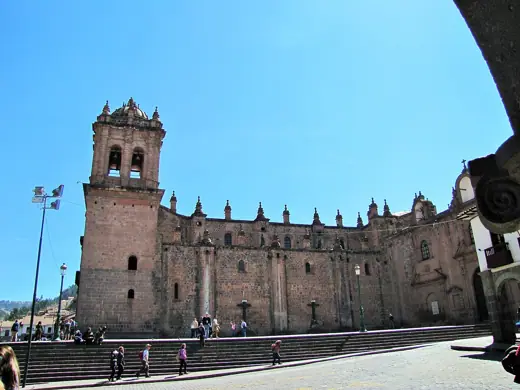
Cusco Cathedral
Key featuresMain temple of Cusco and seat of its archdiocese, completed 1654.
About the building
On Cusco's main square the Incas built the temple of Kiswarkancha, palace of Viracocha, who ruled the Kingdom of Cusco about a century before the Spanish arrived. Building the cathedral was entrusted to Juan Miguel de Veramendi in 1560; Juan Correa replaced him a year later and worked until 1564. In 1615 Miguel Gutiérrez Sencio, a follower of Vitruvius and Giacomo Barozzi who admired the sober Herrerian style of El Escorial, took charge with Francisco Becerra, and the cathedral was finished in 1654. It was built of local stone, with red granite blocks reused from Sacsayhuamán. Its three naves share one height, as at Lima and Jaén, and fourteen cruciform pillars set out twenty-four rib vaults. The facade is Renaissance, the interiors Baroque, late Gothic and Plateresque. Since 1983 it has been within Cusco's UNESCO World Heritage centre.
Sources: Cusco Cathedral (Wikipedia)
More with stoneAll 524 →
Find more with
Stone524 buildings →Monumentality909 buildings →Axis319 buildings →Religious456 buildings →Each opens every building that shares the idea.
Details
- Architect
- Juan Miguel de Veramendi, Juan Correa, Miguel Gutiérrez Sencio, Francisco Becerra
- Place
- Cusco, Peru
- Year
- 1654
- Typology
- Religious
- Movement
- Historic precedent
- Region
- Americas





