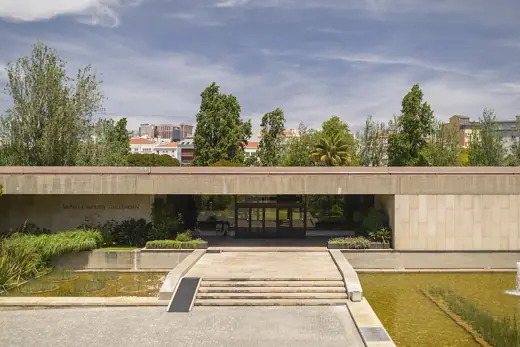
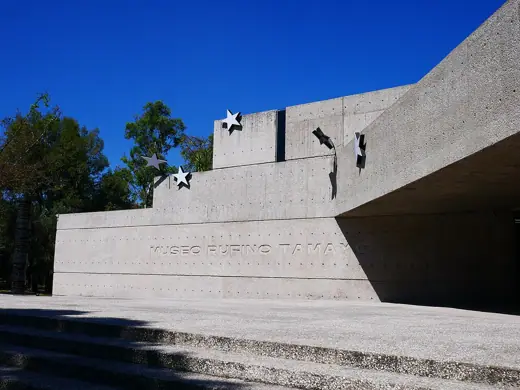
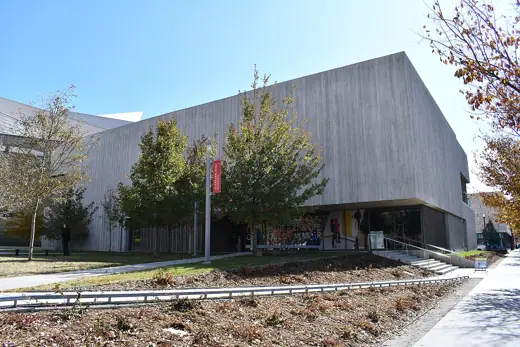
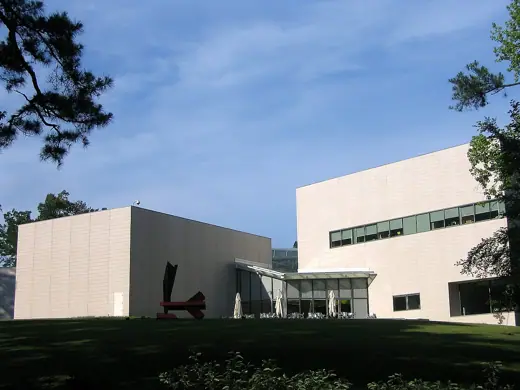
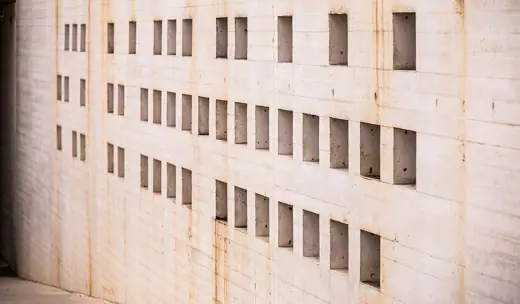
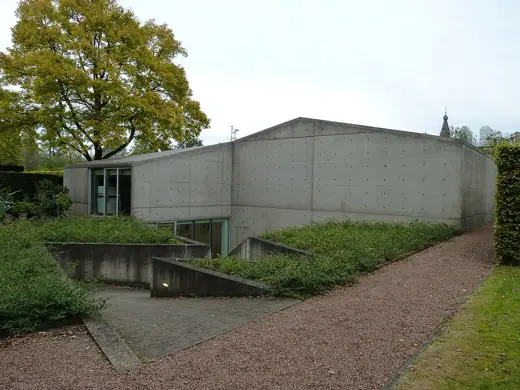
1/5 · ExteriorPhoto: Fundação Calouste Gulbenkian · CC BY-SA 4.0 · source2/5 · ExteriorPhoto: Jules Verne Times Two · CC BY-SA 4.0 · source3/5 · Interior · Fundação Calouste GulbenkianPhoto: Metro Centric · CC BY 2.0 · source4/5 · Interior · Hall with Winter GardenPhoto: Paulo Valdivieso from Lisboa, Portugal · CC BY-SA 2.0 · source5/5 · Plan · Plan of the Calouste Gulbenkian museum, Lisbon, PortugalPhoto: Hmaglione10 · CC BY-SA 4.0 · source
Key featuresLow concrete buildings set into a garden, opening to it through framed views.
About the building
Lisbon's Calouste Gulbenkian Museum, dating from 1969, holds a private art collection ranked among the most important in the world. Three architects, Pedro Cid, Ruy Jervis d'Athouguia and Alberto J. Pessoa, won the design as a team, while the park around it was laid out by the landscape architects Gonçalo Ribeiro Telles and António Viana Barreto. The building was conceived from the start to display the collection. That was fairly rare then, since most museums occupied buildings first put up for some other use. The permanent galleries follow both date and geography, splitting the visit into two separate routes. The first route features Greek and Roman art from classical antiquity, with work from the Nile Valley and the ancient Near East. The building was awarded the Valmor Prize in 1975.
Portrait: José Rafael Botelho · CC BY-SA 3.0 · source
About Calouste Gulbenkian Museum
Lisbon's Calouste Gulbenkian Museum houses one of the world's most important private art collections. It includes works from Ancient Egypt to the early 20th century, spanning the arts of the Islamic World, China and Japan, as well as French decorative arts. It also features the jewellery of René Lalique and works by some of the most important painters of all time, such as Rembrandt, Monet, Rubens, Manet, Renoir, Degas and Turner. The Museum was founded by Armenian Portugal-based oil magnate Calouste Gulbenkian. The Gulbenkian Museum closed for renovation until July 2026, and reopened on 18 July 2026.
The museum was designed as a showcase for the collection, which was relatively unique for an art museum at a time when most museums were housed in buildings originally built for other purposes. The landscaping and museum building interact, with views into woods and wetlands punctuating the artwork on display, while woodland paths offer views of the dramatic building, the edges of which include terraces and water features that blur the border between built and natural environment. The grouped buildings are set within a park bordered by the Avenida de Berna (north), Avenida António Augusto de Aguiar (west), Rua Marquês de Sá da Bandeira (east) and the Centro de Arte Moderna (south).