

Culture & sport · Parametric
AAMI Park (Melbourne Rectangular Stadium)
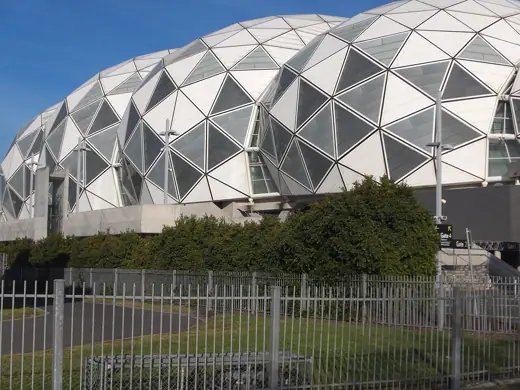
Key features'Bioframe' roof of geodesic domes over the stands, letting light through to the pitch.
About the building
AAMI Park, formally Melbourne Rectangular Stadium, stands in the Melbourne Sports and Entertainment Precinct. It is mainly a soccer and rugby league ground, home to Melbourne Victory FC, Melbourne City FC and the Melbourne Storm. Built in 2010, it replaced Olympic Park, a ground meant for track and field, as the city's main rectangular stadium, and is described as the first large stadium purpose-built for rectangular sports. Its 30,050 seats make it Melbourne's third largest stadium. COX Architecture gave it a "Bioframe" design: a geodesic dome roof shelters much of the seating yet lets light reach the pitch. Thousands of programmable LED lights on the outside can show patterns and images. The foundations allow for 50,000 seats, but the roof was not planned for that, so expanding would need major work. Early in construction it was nicknamed the Bubble Dome.
Sources: Melbourne Rectangular Stadium (Wikipedia)
More by Cox ArchitectureAll 2 →
More with geometryAll 1061 →
Find more with
Geometry1061 buildings →Structure as expression668 buildings →Facade as skin828 buildings →Culture & sport614 buildings →Each opens every building that shares the idea.
Details
- Architect
- Cox Architecture
- Place
- Melbourne, Australia
- Year
- 2010
- Typology
- Culture & sport
- Movement
- Parametric
- Region
- Oceania