


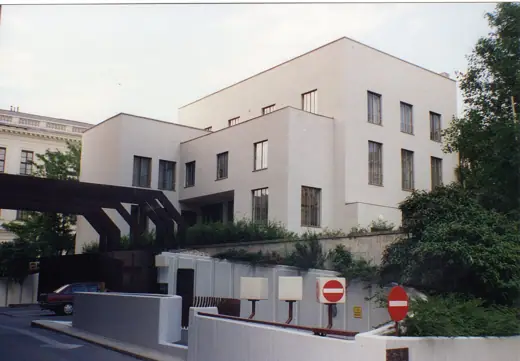


House · Modernism
Wittgenstein House

Key featuresAustere plastered cubes with tall steel doors and windows, every proportion refined by Wittgenstein.
About the building
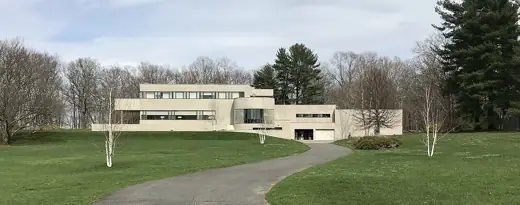
Haus Wittgenstein, also called the Stonborough House, is a modernist townhouse on the Kundmanngasse in Vienna. Margaret Stonborough-Wittgenstein commissioned it from the architect Paul Engelmann, and brought in her brother Ludwig Wittgenstein, the philosopher, to help. Engelmann laid out a spare house in the manner of Adolf Loos, made of three rectangular blocks. Wittgenstein concentrated on the windows, doors, door handles and radiators, insisting that every detail match his specification until everyone on the job was worn out. Each window had a 150 kg metal screen, moved by a pulley he designed. The house was complete by December 1928. Following a campaign by Bernhard Leitner, the Vienna Landmark Commission rescued the house, and it was made a national monument in 1971. It is a lesson in how far precise detailing can shape a plain building.
Sources: Haus Wittgenstein (Wikipedia)
More with detailAll 553 →
Find more with
Detail553 buildings →Geometry1061 buildings →Light & shadow431 buildings →House332 buildings →Each opens every building that shares the idea.
Details
Go deeper




See all 9 links


More · HouseAll 332 →
Portrait: Moritz Nähr · Public domain · source