

Infrastructure · Modernism
Tokyo Tower
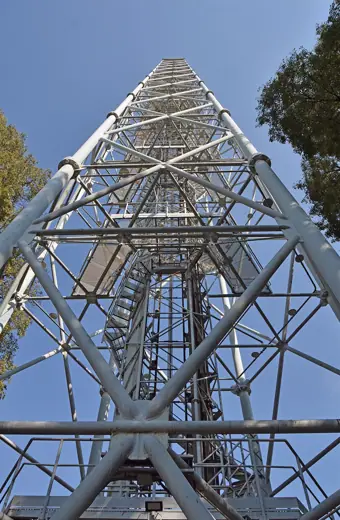
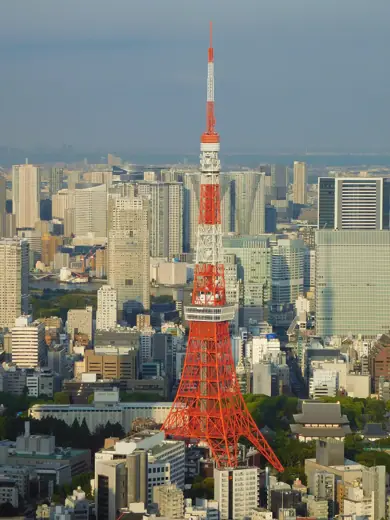
Key featuresA steel lattice tower painted in international orange and white, modelled on the Eiffel Tower.
About the building
Officially named the Japan Radio Tower, Tokyo Tower was finished in 1958 in Shiba-koen, Minato, as a communications and observation tower. Tachū Naitō, who designed tall buildings in Japan, was picked for the job and looked to the West, basing his lattice design on the Eiffel Tower. With the engineering firm Nikken Sekkei, he claimed it could survive earthquakes twice as strong as the Great Kantō earthquake of 1923, or typhoon winds of up to 220 km/h. A third of its steel was scrap taken from US tanks damaged during the Korean War. At 332.9 metres it is higher than the Eiffel Tower yet weighs about 4,000 tons, 3,300 less, being much thinner and simpler in build. It was Japan's tallest tower until Tokyo Skytree in 2012. Its white and international orange paint follows air safety rules.
Sources: Tokyo Tower (Wikipedia)
More with structure as expressionAll 668 →
Find more with
Structure as expression668 buildings →Colour273 buildings →Geometry1061 buildings →Infrastructure223 buildings →Each opens every building that shares the idea.
Details
- Architect
- Tachū Naitō
- Place
- Tokyo, Japan
- Year
- 1958
- Typology
- Infrastructure
- Movement
- Modernism
- Region
- East Asia