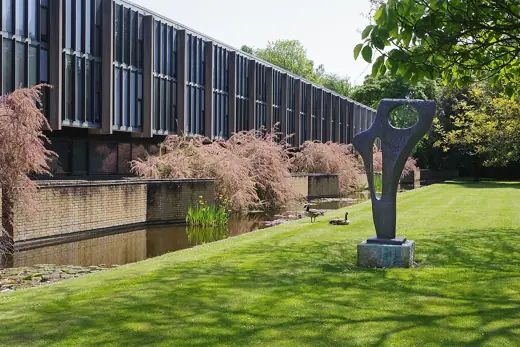
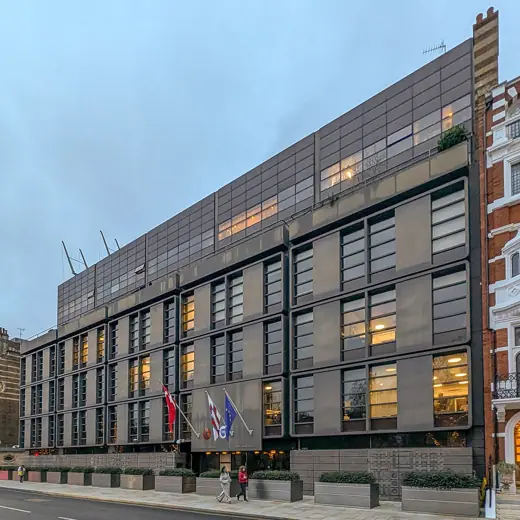
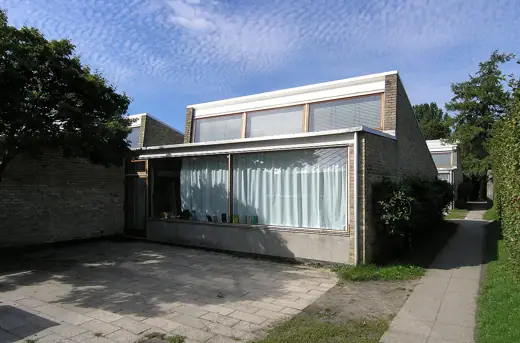
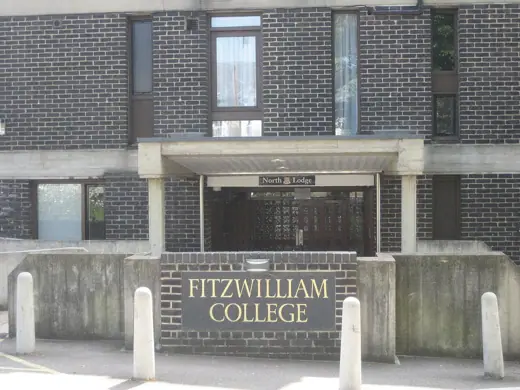
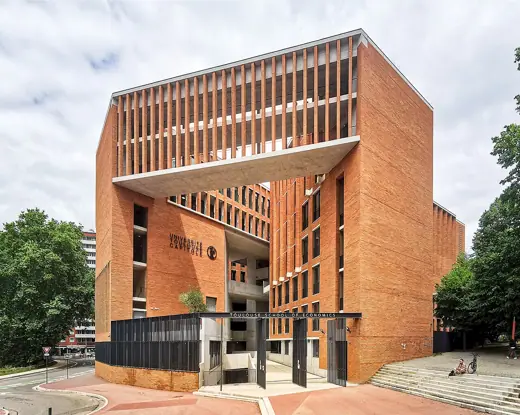
1/5 · Exterior · St Catherine's CollegePhoto: Stephen McKay · CC BY-SA 2.0 · source2/5 · Exterior · St Catherine's CollegePhoto: Stephen McKay · CC BY-SA 2.0 · source3/5 · ExteriorPhoto: seier+seier · CC BY 2.0 · source4/5 · InteriorPhoto: seier+seier · CC BY 2.0 · source5/5 · Interior · St Catherine's College, Oxford (1960-64) by Arne JacobsenPhoto: Steve Cadman · CC BY-SA 2.0 · source
St Catherine's College (colloquially called St Catz or Catz) is one of the constituent colleges of the University of Oxford. The college developed from the St Catherine's Society; it was granted full status as a college in 1962, after a campaign by the historian Alan Bullock, who became the first master of the college, and later vice-chancellor of the university. In 1974, it was one of the first men's colleges to admit women. As of November 2024, it has 494 undergraduate students and 337 graduate students, making it one of the largest colleges in Oxbridge.
Designed by Danish architect Arne Jacobsen, the college was built in an egalitarian architectural style that maximises the number of rooms for academically qualified students who lack the financial resources to study at Oxford. Though, in modern times the college has ceased being distinctly egalitarian, its students coming from a variety of backgrounds, with 27.7% of undergraduates being privately educated, exceeding centuries-old colleges such as St. Edmund Hall (24.8%), Hertford College (23%), Brasenose College (19.3%), and more modern colleges such as Mansfield College (13.8%).
In September 2023, access to areas of the college was restricted due to safety concerns around the use of reinforced autoclaved aerated concrete (RAAC).