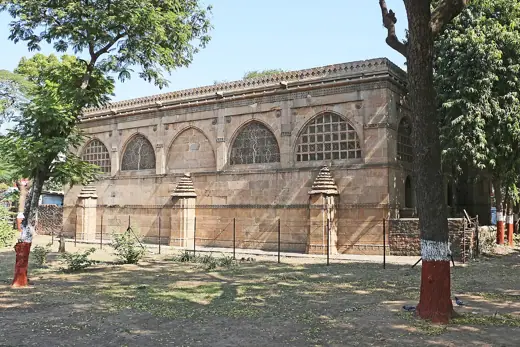
The Sidi Saiyyed Mosque, popularly known locally as Sidi Saiyyed ni Jali, is a Sunni mosque located in Ahmedabad, in the state of Gujarat, India. The mosque was built by Sidi Sayyad, a Habshi nobleman, in 980 AH (1572/1573 CE). The structure is designated as a Monument of National Importance.
The mosque is entirely arcuated and is known for its ten intricately carved stone latticework windows (jalis) on the side and rear arches. The rear wall is filled with square stone pierced panels in geometrical designs. The two bays flanking the central aisle have reticulated stone slabs carved in designs of intertwined trees and foliage and a palm motif. This intricately carved lattice stone window is the Sidi Saiyyed Jali, the unofficial symbol of city of Ahmedabad and the inspiration for the design of the logo of the Indian Institute of Management Ahmedabad.
The central window arch of the mosque, where another intricate jali would typically be expected, is instead walled with stone. This is possibly because the mosque was not completed according to plan before the Mughals invaded Gujarat.