


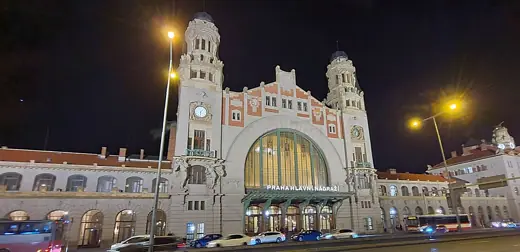


Infrastructure · Art Nouveau
Praha hlavní nádraží (Prague Main Station)
Key featuresArt Nouveau station by Josef Fanta, 1901–09; steel train hall by Marjanko and Kornfeld, 1905–06.
About the building
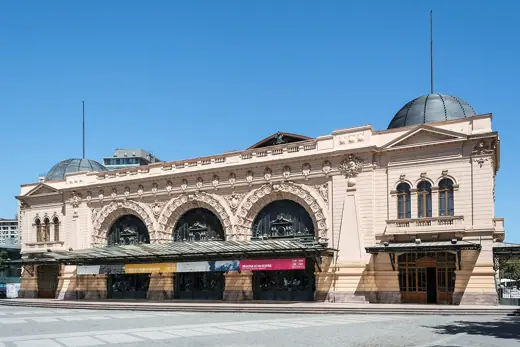
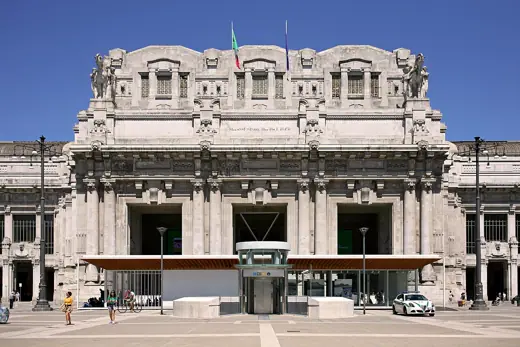
Prague's biggest railway station opened in 1871, named Franz Josef Station after the Austrian emperor. The present building and hall, designed by the Czech architect Josef Fanta, rose between 1901 and 1909 on the site of an older Neo-Renaissance station that was taken down. No Art Nouveau monument in the country is larger. The 150-metre building, with two towers, holds a coffer-ceilinged hall, a restaurant and offices, with 22 doors opening onto a platform paved in mosaic; this earned it the nickname "castle station". Sculptures of Czech cities by Stanislav Sucharda and Ladislav Šaloun decorate its dome. In 1905–1906 Jaroslav Marjanko and Rudolf Kornfeld roofed the tracks with an arched steel hall of two naves, spanning 2 × 33.3 m, 18 m tall and 233 m long. It has been a listed cultural monument since 31 December 1976.
Sources: Praha hlavní nádraží (Wikipedia)
More with steel & glassAll 519 →
Find more with
Steel & glass519 buildings →Vault130 buildings →Facade as skin828 buildings →Infrastructure223 buildings →Each opens every building that shares the idea.
Details
- Architect
- Josef Fanta
- Place
- Prague, Czech Republic
- Year
- 1909
- Typology
- Infrastructure
- Movement
- Art Nouveau
- Region
- Europe

Go deeper





See all 7 links

More · InfrastructureAll 223 →
Portrait: Unknown author · Public domain · source