




Public space · Modernism
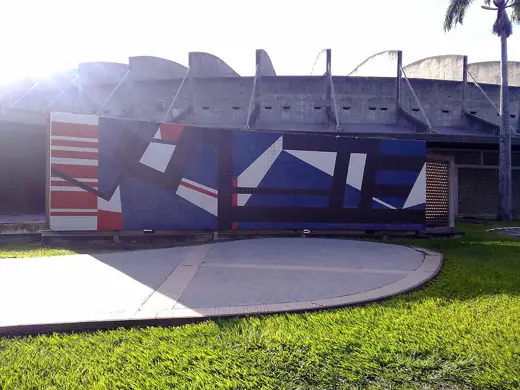
Covered Plaza, University City of Caracas

Key featuresCovered plaza made as an open museum: perforated walls, gaps in the roof and ramps among murals and sculpture.
About the building
Carlos Raúl Villanueva meant the Covered Plaza to serve as the physical and cultural centre of the University City of Caracas, inspired by halls and central squares in Europe. Planned as an indoor-outdoor "open museum", it blends art into its surroundings and architecture into art. Pierced walls, gaps in the roof and linking ramps give the space a sense of flow. It ties together many buildings of the Central Complex, including the Aula Magna, the Paraninfo, the students' union, the rector's offices and the main library. Plaza and Aula Magna were inaugurated together on 2 March 1954. UNESCO names it, with the Aula Magna and its "Clouds" by Alexander Calder and the Olympic Stadium, among the campus's leading works of modern architecture and art, and it is considered one of Venezuela's key artistic and cultural works.
Sources: University City of Caracas · Carlos Raúl Villanueva (Wikipedia)
More by Carlos Raúl VillanuevaAll 10 →
More with public spaceAll 617 →
Find more with
Public space617 buildings →Colour273 buildings →Light & shadow431 buildings →Public space88 buildings →Each opens every building that shares the idea.
Details
- Place
- Caracas, Venezuela
- Year
- 1954
- Typology
- Public space
- Movement
- Modernism
- Region
- Americas
Go deeper





See all 7 links

Portrait: Paolo Gasparini · Public domain · source