Key featuresTatami-module rooms and sliding screens that inspired Taut, Gropius and Tange.
About the building
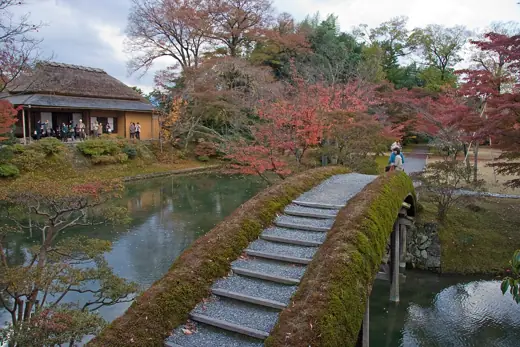
On Kyoto's western outskirts, the Katsura Imperial Villa is an Imperial residence together with its gardens and outbuildings, linked to Prince Toshihito and Toshitada. At first the palace was owned by the Hachijō-no-miya family's prince. He lacked wealth and resources, so the first villa was a modest building, compared to 'a teahouse in the melon patch'. The mats at Katsura generate the sprawling, pinwheel-shaped plan the villa has now. Its shoji, white translucent screens stiffened with a wooden lattice, may be fixed, hanging or sliding. Both the main villa and the teahouses for the tea ceremony set in the strolling gardens are placed to make the most of varied foliage and views that change with the seasons. The grounds count as a notable example of traditional Japanese gardening, and the villa is a precedent for planning from the mat.
The Katsura Imperial Villa or Katsura Detached Palace (桂離宮, Katsura Rikyū; Japanese pronunciation: [ka.tsɯ.ɾa ɾʲiꜜ.kʲɯː]) is an Imperial residence with associated gardens and outbuildings in the western suburbs of Kyoto, Japan. Located on the western bank of the Katsura River in Katsura, Nishikyō-ku, the Villa is 8km distant from the main Kyoto Imperial Palace. The villa and gardens are nationally recognized as an Important Cultural Property of Japan.
The grounds of the villa are regarded as a notable exemplar of traditional Japanese gardening. Tea ceremony houses within the strolling gardens and the main villa itself are all sited to maximize appreciation of varied foliage and changing seasonal vistas.
The palace originally belonged to the prince of the Hachijō-no-miya (八条宮) family. The Imperial Household Agency currently administers the site. Although the Imperial Villa itself is not open to visitors, public tours of the gardens are available by appointment.