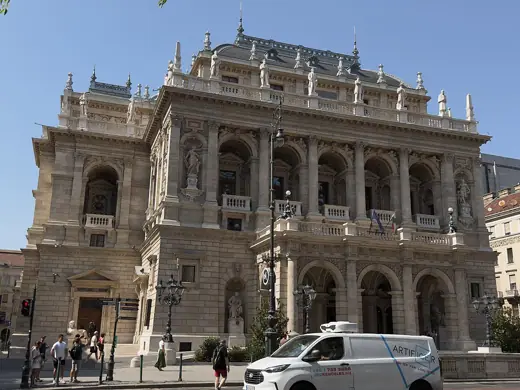
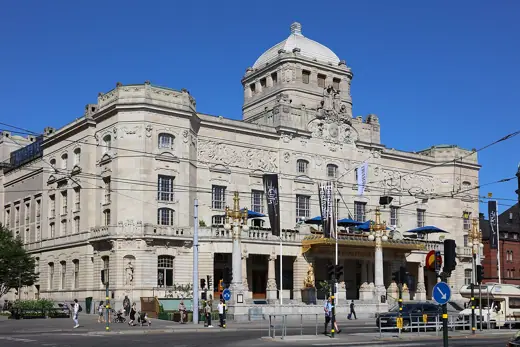
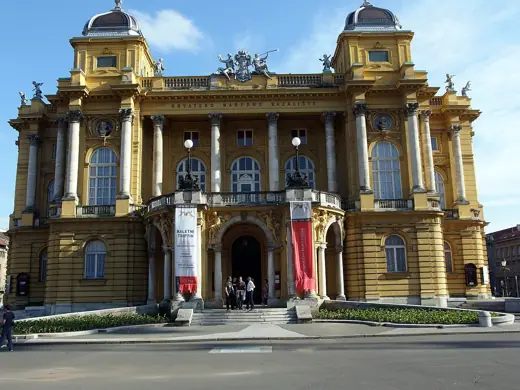
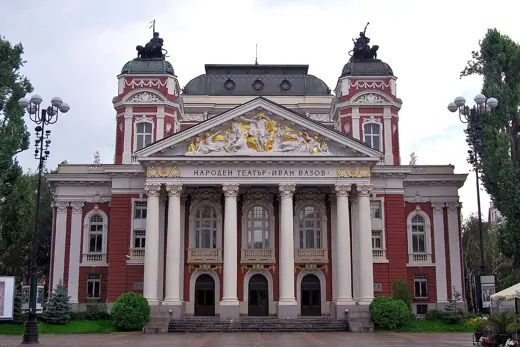
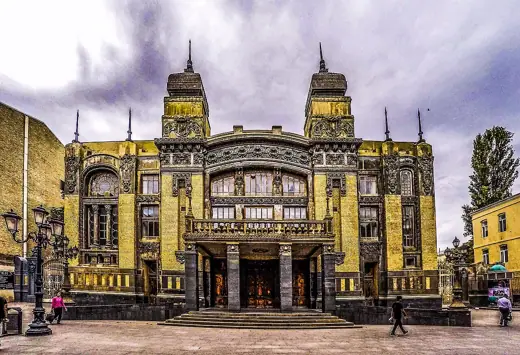
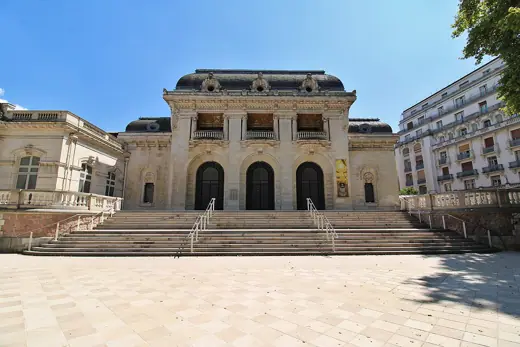
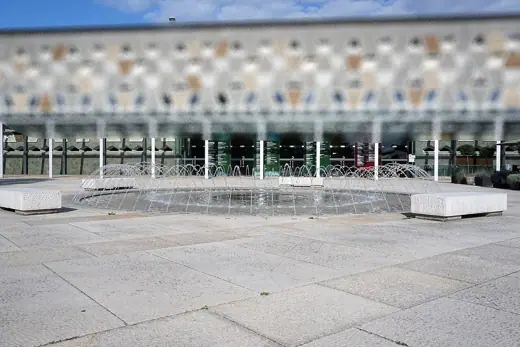
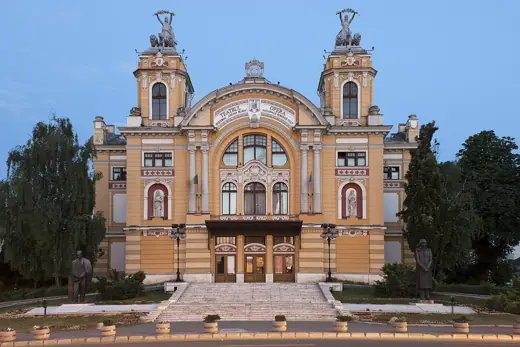
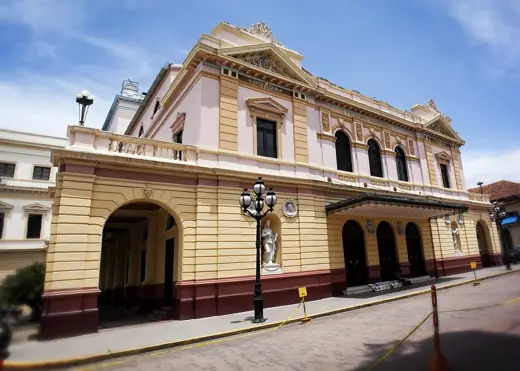
1/6 · Context · The Hungarian State Opera House on Andrássy út in Budapest, Hungary, seen from across the avenuePhoto: Mike is Michi · CC BY-SA 4.0 · source2/6 · Exterior · Andrássy Christmas Lights 2025Photo: Elekes Andor · CC BY 4.0 · source3/6 · Exterior · Budapest (Hungary)Photo: Jorge Franganillo · CC BY 2.0 · source4/6 · Exterior · Budapest, OperaPhoto: Christo · CC0 · source5/6 · Exterior · Budapest, OperaPhoto: Christo · CC0 · source6/6 · Plan · Budapest State OperaPhoto: Unknown author · Public domain · source
Key featuresOpera house on Andrássy Avenue designed by Miklós Ybl; construction began 1875, opened 27 September 1884.
About the building
Miklós Ybl, a central name in 19th-century Hungarian architecture, designed this Budapest house, first called the Hungarian Royal Opera House. Budapest and Emperor Franz Joseph I paid for it; work began in 1875 and it opened on 27 September 1884. Its style is neo-Renaissance with Baroque touches, and the decoration of its symmetrical front takes music as its theme. The horseshoe auditorium seats 1,261; engineers from several countries tested it in the 1970s and ranked its acoustics third in Europe, behind Milan's La Scala and the Palais Garnier. A bronze chandelier of 3,050 kg lights Károly Lotz's fresco of the Greek gods on Olympus. The stage had the latest technology of its day, a revolving floor and metal hydraulics. Restored and given new stage machinery, it reopened in March 2022 with a three-day festival.
Portrait: József Marastoni · Public domain · source
About Hungarian State Opera House
The Hungarian State Opera House (Hungarian: Magyar Állami Operaház [ˈmɒɟɒr ˈaːlːɒmi ˈopɛrɒɦaːz]) is a historic opera house located in central Budapest, on Andrássy avenue. Originally known as the Hungarian Royal Opera House, it was designed by Miklós Ybl, a major figure of 19th-century Hungarian architecture. Construction began in 1875, funded by the city of Budapest and by Emperor Franz Joseph I of Austria-Hungary, and the new house opened to the public on the 27 September 1884. Before the closure of the "Népszínház" in Budapest, it was the third largest opera building in the city; today it is the second largest opera house in Budapest and in Hungary.
The decoration of the symmetrical façade follows a musical theme. In niches on either side of the main entrance there are figures of Erkel and Liszt, which were sculpted by Alajos Stróbl.
The foyer has marble columns. The vaulted ceiling is covered in murals by Bertalan Székely and Mór Than. They depict the nine Muses.
Wrought-iron lamps illuminate the wide stone staircase and the main entrance. Going to the opera was a great social occasion in the 19th century. A vast, sweeping staircase was an important element of the opera house as it allowed ladies to show off their new gowns.