
Public space · Contemporary
Hatirjheel
Key featuresLake and waterfront public space in central Dhaka, opened in 2013; design team led by Iqbal Habib.
About the building
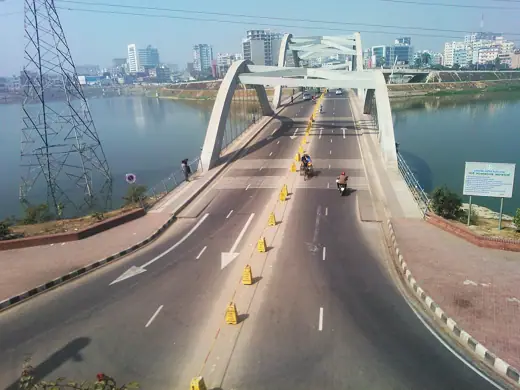
Hatirjheel, Bengali for Lake of Elephant, is a Dhaka lakefront wrapped in roads and bridges meant to ease traffic. The idea dates from 1995, to improve movement around Dhaka while protecting one of its main natural basins for holding rainwater, with drainage channels between the old and new city. The government launched it in 2008. Its team was led by the architect Iqbal Habib of VITTI Sthapati Brindo, working with Ehsan Khan and Ishtiaque Zahir. Across 302 acres it added an 8.8 km expressway, 9.8 km of service roads, bridges, overpasses and viaducts, at a revised cost of US$180 million; there is also an amphitheatre for 2,000. Opened in 2013, it is now a favourite place for residents to relax, but poor sewage infrastructure has left the water badly polluted, and it has failed as a rainwater store.
Sources: Hatirjheel (Wikipedia)
More with waterAll 306 →
Find more with
Water306 buildings →Public space617 buildings →Landscape736 buildings →Public space88 buildings →Each opens every building that shares the idea.
Details
- Architect
- Iqbal Habib (VITTI Sthapati Brindo)
- Place
- Dhaka, Bangladesh
- Year
- 2013
- Typology
- Public space
- Movement
- Contemporary
- Region
- South Asia