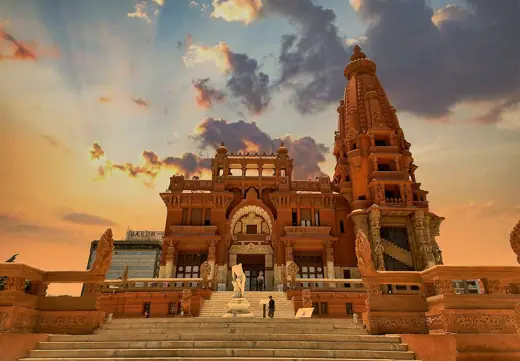
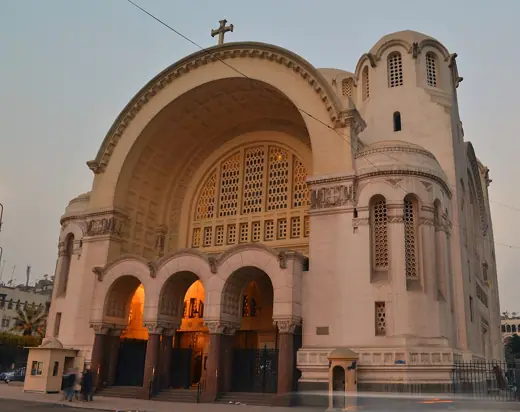
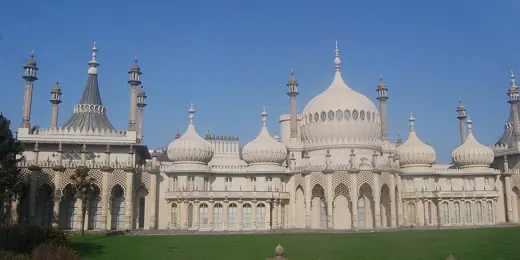
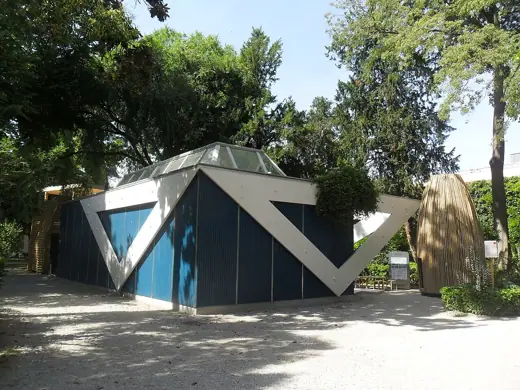
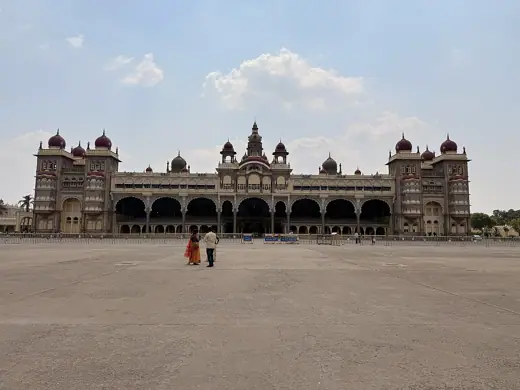
1/5 · Exterior · Baron Empain Palace in Egypt The baron is the founder and builder of Heliopolis area in cairo, EgyptPhoto: Senni555 · CC BY-SA 4.0 · source2/5 · ExteriorPhoto: Gr8worldfromgr8god · CC BY-SA 3.0 · source3/5 · ExteriorPhoto: Ehab ahmed mohammed · CC BY-SA 4.0 · source4/5 · ExteriorPhoto: Sherif Louis Kamel · CC BY-SA 4.0 · source5/5 · Interior · Baron Empain palace in Heliopolis, his palace is a living Indian and Belgian artPhoto: Gr8worldfromgr8god · CC BY-SA 3.0 · source
Key featuresReinforced-concrete mansion modelled on Hindu temples, richly decorated with animal motifs and statues.
About the building
Also called Le Palais Hindou, the Hindu Palace, the Baron Empain Palace is a historic mansion in Heliopolis, north-east of central Cairo. Baron Édouard Empain arrived in Egypt in 1904, aiming to grow his business empire and lay railway lines. By 1906 he had taken on the architect Ernest Jaspar to help shape a 'Heliopolis style' for the new district. The palace itself was the work of a French architect, Alexandre Marcel. Drawing mainly on Angkor Wat in Cambodia and on Orissa's Hindu temples in India, it rose from 1907 to 1911 in reinforced concrete, at that time a mark of luxury. After the Baron's death in 1929, and Egypt's revolution of 1952, the house stood empty. A 2012 agreement with the Belgian government set out to restore it jointly as an international centre for art and culture.
The Baron Empain Palace (Arabic: قصر البارون إمبان, "Qasr el Baron Emban"), also known as Le Palais Hindou (lit. 'The Hindu Palace'), is a distinctive and historic mansion in Heliopolis, a suburb northeast of central Cairo, Egypt. It was built in 1905 for Édouard Empain, Baron Empain, a Belgian businessman and industrialist with particular interests in tramways. The building was inspired architecturally by Hindu temples.
The palace was designed by Alexandre Marcel, a French architect and a member of the French Institute. The palace's interior was constructed and decorated by Georges-Louis Claude. Inspired mostly by Angkor Wat in Cambodia and by the Hindu temples of Orissa in East India, it was built between 1907 and 1911, in reinforced concrete, which was considered a symbol of luxury and status at the time. The building is impressive with the richness of its ornamentation, which includes monkeys, elephants, lions and snakes, as well as statues of Buddha, Shiva, Krishna and other Hindu deities.