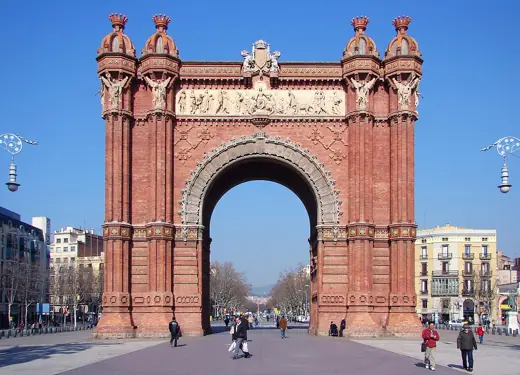
1/6 · Exterior · Arc de Triomphe de BarcelonePhoto: Bajajvikram · CC BY-SA 3.0 · source2/6 · Exterior · View of the Arc de Triomf in BarcelonaPhoto: C messier · CC BY-SA 4.0 · source3/6 · Exterior · Barcelona's Arc de Triomf viewed from the Passeig de Lluis Companys in the morningPhoto: Daniel Kraft · CC BY-SA 3.0 · source4/6 · Exterior · The Arc de Triomf was the main entrance to the 1888 Barcelona World FairPhoto: Isiwal · CC BY-SA 3.0 · source5/6 · Interior · Full moon is shining inside the ArcPhoto: Logvivan · CC BY-SA 4.0 · source6/6 · Interior · Interior de l'Arc de TriomfPhoto: Amontero · CC BY-SA 4.0 · source
The Arc de Triomf (Catalan pronunciation: [ˈarɡ də tɾiˈoɱf]), translated: Arch of Victory, is a memorial arch in Barcelona, Catalonia, Spain. It was built by architect Josep Vilaseca i Casanovas as the main access gate for the 1888 Barcelona World Fair. The arch crosses over the wide central promenade of the Passeig de Lluís Companys, leading to the Ciutadella Park that now occupies the site of the world fair. It is located at the northern end of the promenade, facing the Passeig de Sant Joan.
The arch is built in reddish brickwork in the Neo-Mudéjar style. The front frieze contains the stone sculpture Barcelona rep les nacions (Catalan for "Barcelona welcomes the nations") by Josep Reynés. The opposite frieze contains a stone carving entitled Recompensa ("Recompense"), a work from Josep Llimona's earliest period, representing the granting of awards to the participants in the World Exposition. The friezes along the sides of the arch include allegories of agriculture, industry and trade by Antoni Vilanova and of sciences and arts by Torquat Tassó. The two pillars of the arch feature bats carved in stone, which were the emblem of King Jaume I, who ruled over a period of prosperity in Barcelona.