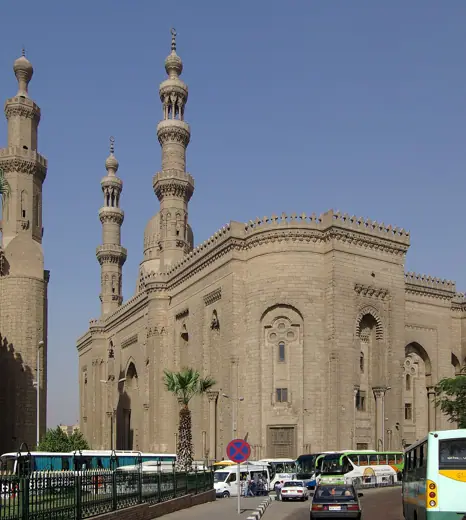
1/7 · Exterior · Cairo, Al-Rifa'i MosquePhoto: Berthold Werner · CC BY 3.0 · source2/7 · ExteriorPhoto: OmarJihad · CC BY-SA 4.0 · source3/7 · ExteriorPhoto: Sherif Alyamany · Public domain · source4/7 · Exterior · El Refaei MosquePhoto: Nan deko · CC BY-SA 3.0 · source5/7 · InteriorPhoto: mohamed saleh · CC BY-SA 4.0 · source6/7 · Context · Mosques of Al-Rifa'i and Sultan Hassan from above Cairo CitadelPhoto: Amr F.Nagy · CC BY-SA 4.0 · source7/7 · Plan · Floor plan of the Rifa'i Mosque in Cairo, EgyptPhoto: Ahmad Badr · Public domain · source
Key featuresNeo-Mamluk mosque with two minarets and a dome, in stone and marble, facing the Sultan Hassan Mosque.
About the building
The Al-Rifa'i Mosque stands in Citadel Square, beside the Citadel in Islamic Cairo, and doubles as a royal mausoleum for the family of Muhammad Ali. It faces the Mosque-Madrasa of Sultan Hassan and was conceived to complement it, part of a wide effort by Egypt's 19th-century rulers to tie themselves to the supposed glory of Egypt's earlier Islamic eras while modernising the city. Commissioned for Hoshiyar Qadin, mother of Khedive Isma'il Pasha, it was built in two phases between 1869 and 1912. The first architect, Hussein Fahmi Pasha, died during the first phase, and work stopped when Isma'il abdicated in 1880. It resumed only in 1905, under Abbas II, with the Hungarian architect Max Herz supervising. The design is Neo-Mamluk, then in fashion in Cairo, and its two minarets rise from circular bases like those of the Sultan Hassan Mosque.
The Al-Rifa'i Mosque (Arabic: مسجد الرفاعي, romanized: Al-Rifai, lit. 'Refaai Mosque') is a mosque located in Citadel Square, adjacent to the Citadel, in Islamic Cairo, Egypt. Its name is derived from the Ali Abu Shubbak who is buried in the mosque. It also serves as the royal mausoleum of Muhammad Ali's family. The building is located opposite the Mosque-Madrasa of Sultan Hassan, which dates from around 1361, and was architecturally conceived as a complement to the older structure as part of a vast campaign by the 19th century rulers of Egypt to both associate themselves with the perceived glory of earlier periods in Egypt's Islamic history and modernize the city.
The mosque was designed in a Neo-Mamluk style, which was fashionable in Cairo at the time and which referenced historic Mamluk architecture. When developing its design, the architects of Al-Rifai Mosque tried to match the Sultan Hassan Mosque next to it in grandeur and height even though they faced some difficulties that were criticized by archaeologists and which were remedied under the supervision of Max Herz.