Vladimir Shukhov (1853–1939) was a Russian and Soviet engineer, scientist and architect whose new methods of structural analysis led to the world's first hyperboloid structures, diagrid shells, tensile structures and gridshells. Born in Graivoron, in today's Belgorod Oblast, he graduated with a gold medal from the Imperial Moscow Technical School in 1876, turned down a post teaching mathematics, and became chief engineer of a new engineering company. Besides oil tanks, pipelines and the first cracking process, he invented a family of doubly curved, lightweight forms based on hyperboloids of revolution, together with the mathematics to calculate them, and built about 200 hyperboloid towers. His honours included the Lenin Prize (1929).
Read moreShow less
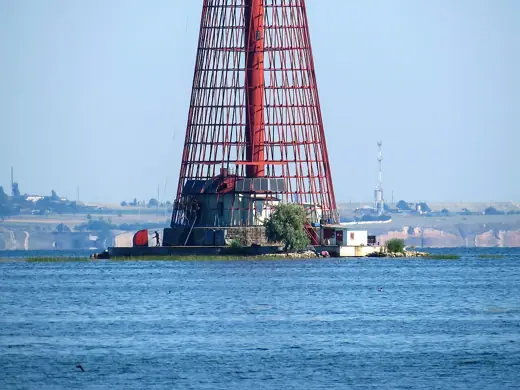
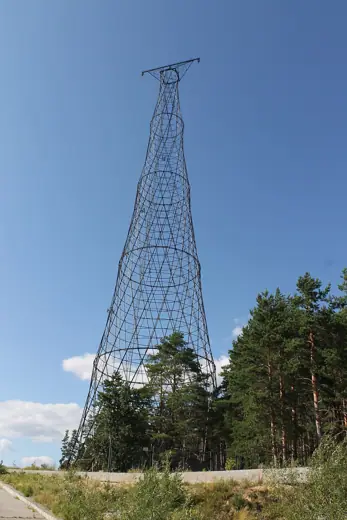
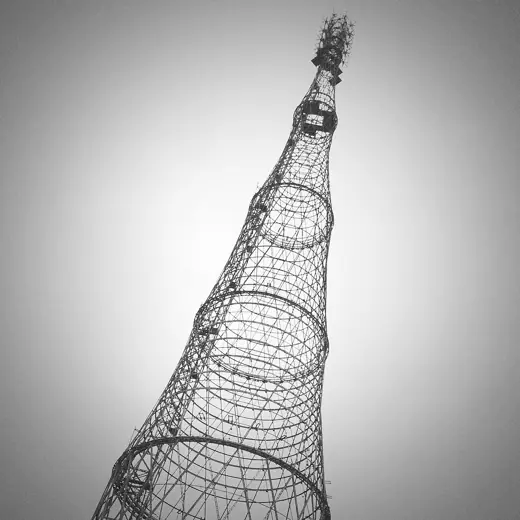
The Adziogol Lighthouse near Kherson in Ukraine (1911) is a lattice hyperboloid of steel bars that still guides ships into the Dnieper estuary. The Shukhov Tower in Moscow (1922), a 160-metre steel diagrid radio mast, was built during the Russian Civil War, and the Shukhov Tower on the Oka River (1929) carried power lines near Nizhny Novgorod. With Konstantin Melnikov he engineered the Bakhmetevsky Bus Garage (1928) and the Novo-Ryazanskaya Street Bus Garage (1929) in Moscow, both Constructivist works.