Ram Karmi (1931–2013) was an Israeli architect known for his brutalist work. Born in Jerusalem, the son of the architect Dov Karmi, he grew up in Tel Aviv, served in the 1948 war and studied at the Technion in Haifa and the Architectural Association in London. His early buildings included the Negev Center in Beersheba (1960) and the Tel Aviv Central Bus Station, long criticised as hard to find one's way in. After the Six-Day War of 1967 he rethought his brutalism, and from 1974 to 1979 he was chief architect of Israel's housing ministry, reworking its public housing. He received the Israel Prize in 2002.
Read moreShow less
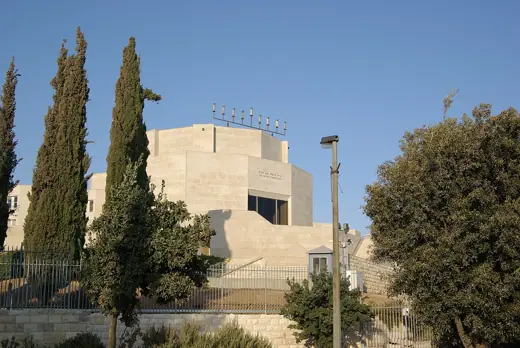
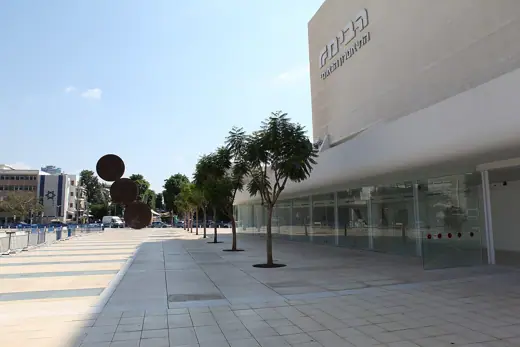
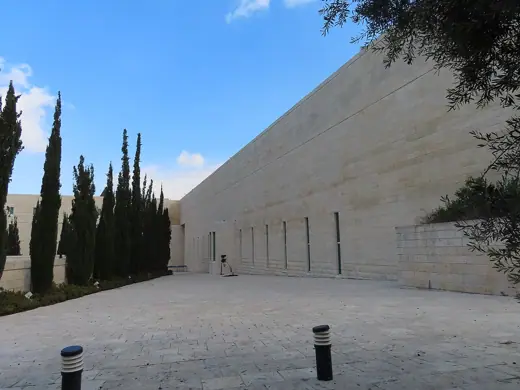
He completed the Hecht Synagogue in Jerusalem in 1981. With his sister Ada Karmi-Melamede he won the 1986 competition for the Supreme Court of Israel (1992); set on a hill in Jerusalem, it joins traditional motifs with post-modern design, and Paul Goldberger wrote that in it "the sharpness of the Mediterranean architectural tradition and the dignity of the law are here married with remarkable grace." From 2007 he led the renovation of the Habima Theatre in Tel Aviv (2012).