Victor Horta (1861–1947) was a Belgian architect and designer, one of the founders of the Art Nouveau movement and a forerunner of modern architecture through his open plans and his use of iron, steel and glass. An admirer of the French theorist Viollet-le-Duc, he first worked with glass and iron on the Royal Greenhouses of Laeken. In 2000 four of his Brussels town houses were listed together as a UNESCO World Heritage Site, praised for "their open plan, the diffusion of light" and the joining of curved decoration with structure.
Read moreShow less
The Autrique House (1893) came just before the Hôtel Tassel (1894), often called the first Art Nouveau house, where slender iron columns carry a large bay window. The Hôtel van Eetvelde (1898) and his own Horta House (1901), now the Horta Museum, followed. Later he moved to a more geometric, Art Deco-influenced style: at the Centre for Fine Arts (Bozar) in Brussels (1928), reinforced concrete let him shape a horseshoe-shaped concert hall. Brussels-Central Station, delayed by economic trouble and war, was finished in 1952. Victor Horta's houses are studied for light, open plans and structure joined to ornament.
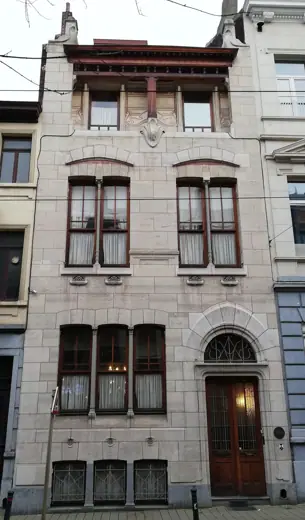 Autrique House1893 · Brussels
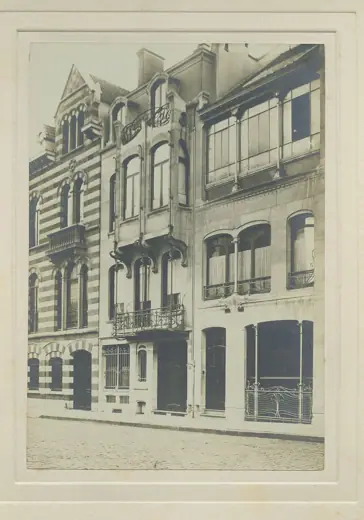 Horta House1901 · Brussels
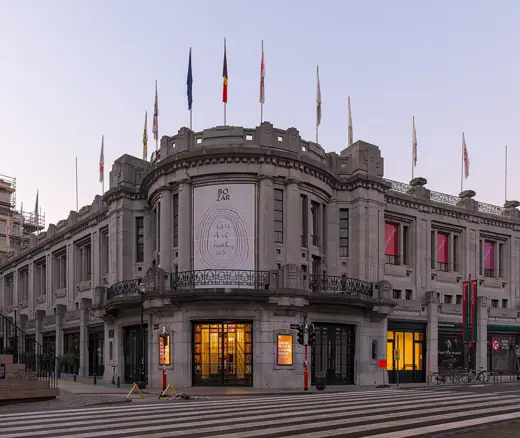 Centre for Fine Arts (Bozar)1928 · Brussels
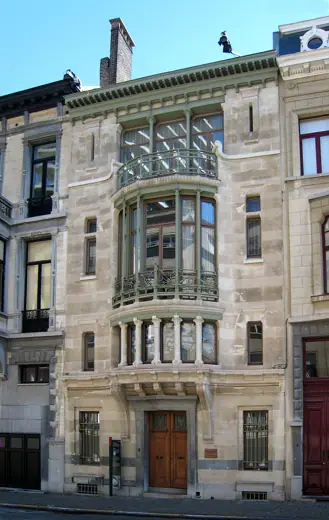 Hôtel Tassel1894 · Brussels
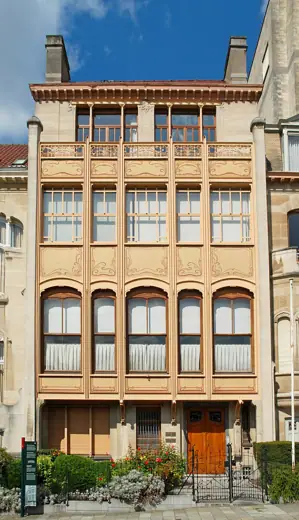 Hôtel van Eetvelde1898 · Brussels
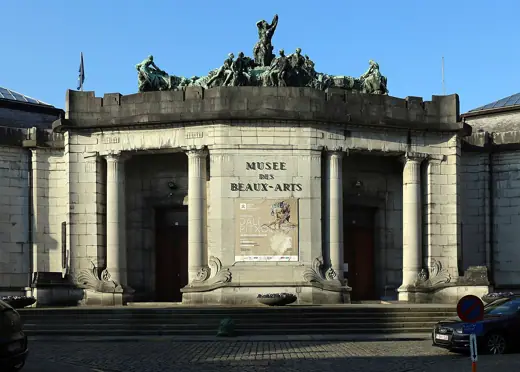 Museum of Fine Arts, Tournai1928 · Tournai
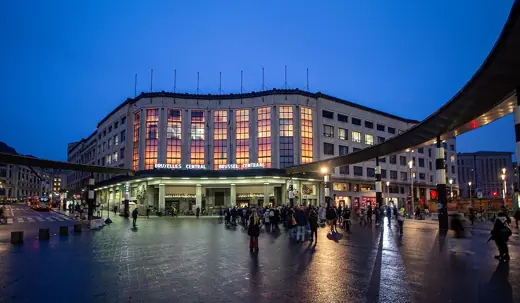 Brussels-Central Station1952 · Brussels