Louis Kahn (1901–1974) was an Estonian-born American architect based in Philadelphia, known for monumental buildings that do not hide their weight, their materials or the way they are put together. He worked mostly in textured brick and bare concrete set against fine surfaces such as travertine, and received the AIA Gold Medal in 1971. His imagined talk with a brick ("What do you want, Brick?" "I like an arch.") sums up his respect for materials.
Read moreShow less
The Richards Medical Research Laboratories in Philadelphia (1960) were a breakthrough, with a clear split between "served" spaces and the "servant" spaces that hold stairs and services. At the Salk Institute in La Jolla (1965), two laboratory wings frame a travertine plaza and a thin channel of water that leads the eye to the Pacific. The Phillips Exeter Academy Library (1971) opens a central atrium through huge circular openings onto the book stacks. The Kimbell Art Museum in Fort Worth (1972) lights its art through slits along the top of cycloid vaults. His last project was the National Assembly of Bangladesh in Dhaka. Louis Kahn's buildings are studied for light, mass and clear construction.
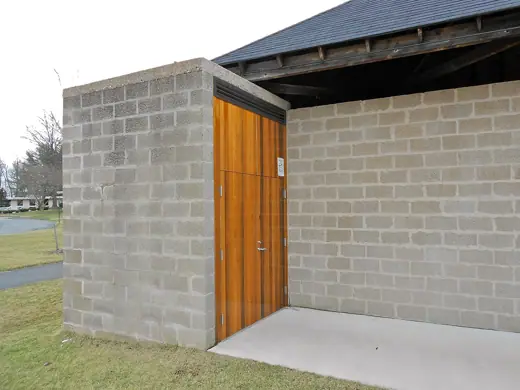 Trenton Bath House1955 · Ewing
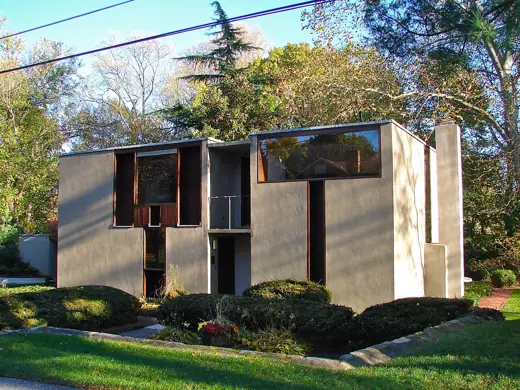 Margaret Esherick House1961 · Philadelphia
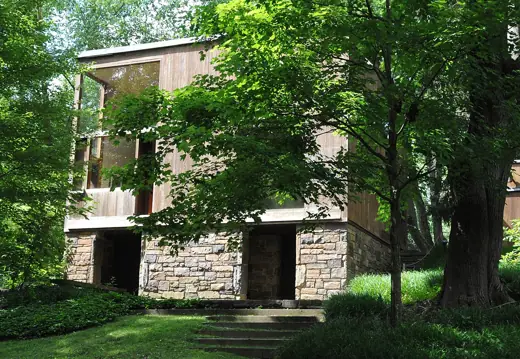 Fisher House1967 · Hatboro
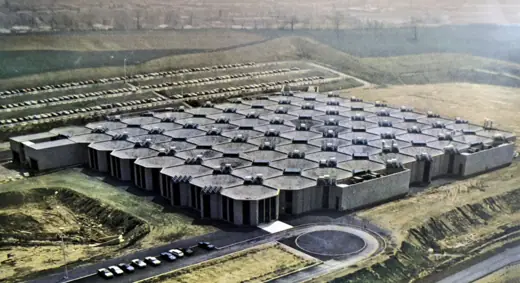 Olivetti-Underwood Factory1970 · Harrisburg
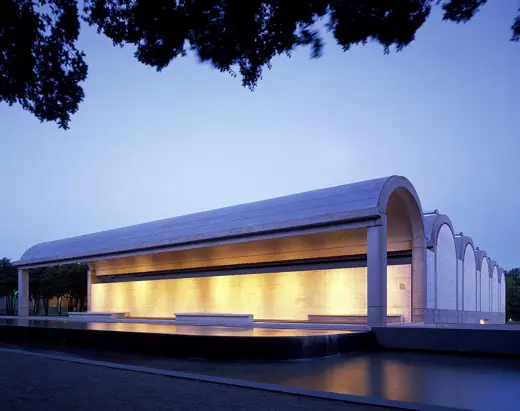 Kimbell Art Museum1972 · Fort Worth
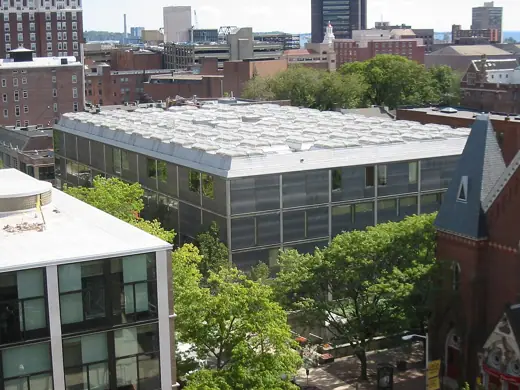 Yale Center for British Art1974 · New Haven
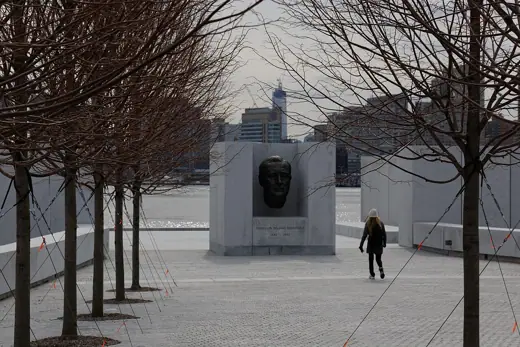 Franklin D. Roosevelt Four Freedoms Park2012 · New York
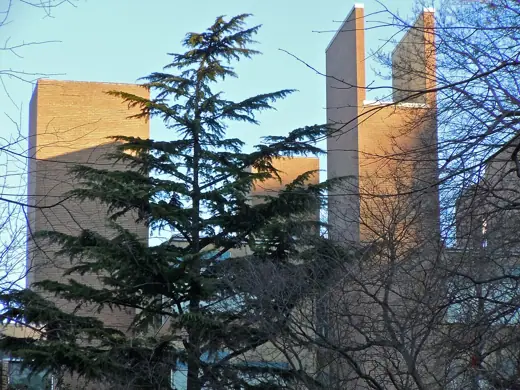 Richards Medical Research Laboratories1960 · Philadelphia
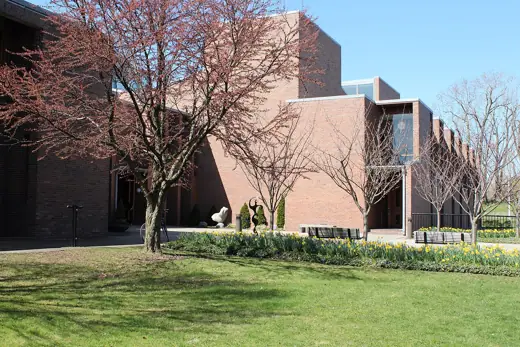 First Unitarian Church of Rochester1962 · Rochester
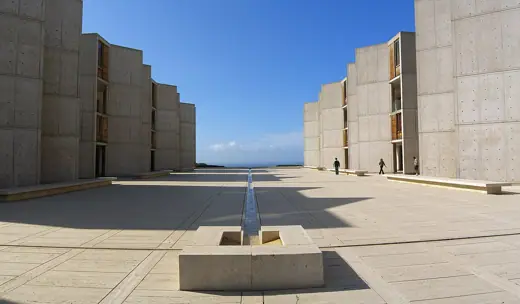 Salk Institute1965 · La Jolla
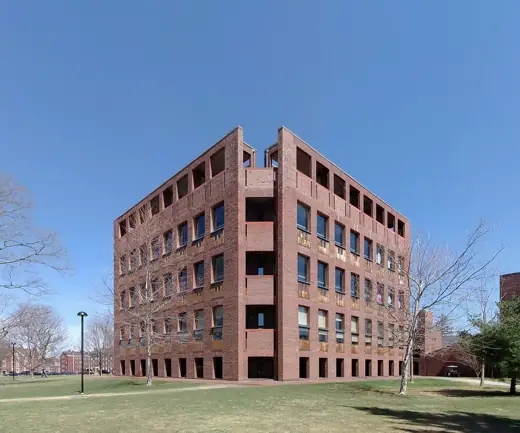 Phillips Exeter Academy Library1971 · Exeter
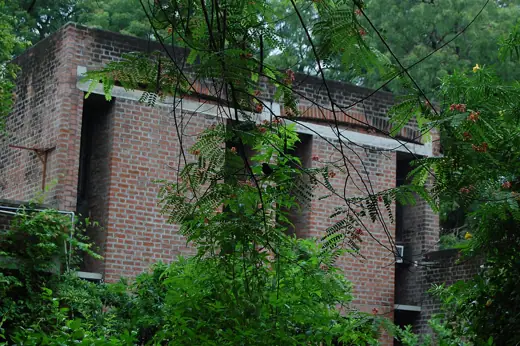 IIM Ahmedabad1974 · Ahmedabad
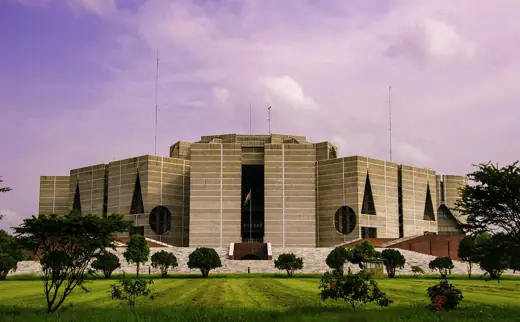 National Assembly of Bangladesh1982 · Dhaka