Togo Murano (1891–1984) was a Japanese architect, recognised as a master of the modern sukiya style, who completed more than three hundred projects in a career that lasted until his death. He studied electrical engineering and then architecture at Waseda University, graduating in 1918, and spent eleven years in Osaka in the office of Setsu Watanabe before starting his own practice in 1929. Rather than follow one style, he used the sukiya tradition, with its attention to surfaces, contrasting materials and fine detail, to join Japanese tradition with elements borrowed from the West.
Read moreShow less
The Memorial Cathedral for World Peace in Hiroshima (1954) replaced a cathedral destroyed by the atomic bomb; Murano, a juror in the competition, ended up designing it, with a concrete frame filled with rough bricks made from earth containing ash from the bomb. Yokohama City Hall (1959 building) followed. The Nissay Theatre (Nippon Life Hibiya Building) in Tokyo (1963) has a ceiling encrusted with mother-of-pearl, an example of the sukiya attention to surfaces in his work. His later projects introduced angular motifs, circular plans and curves, as at the Tanimura Art Museum in Itoigawa (1983).
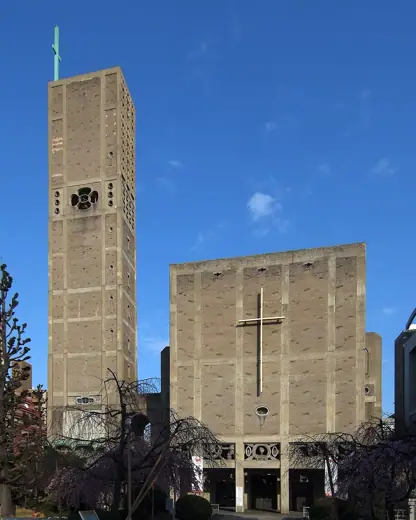 Memorial Cathedral for World Peace1954 · Hiroshima
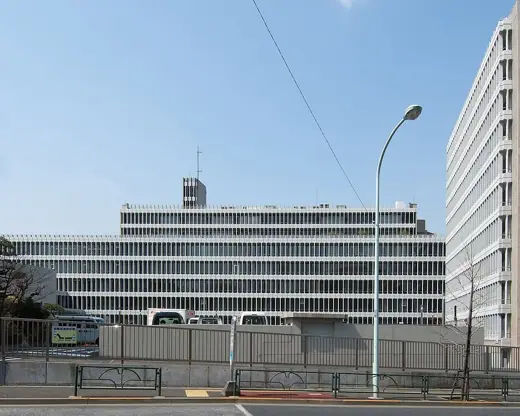 Meguro City Office (former Chiyoda Life Insurance HQ)1966 · Tokyo
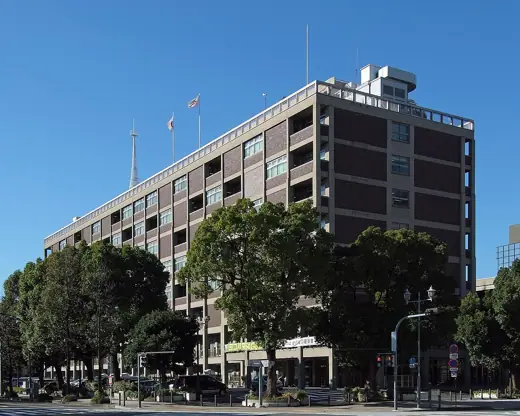 Yokohama City Hall (1959 building)1959 · Yokohama
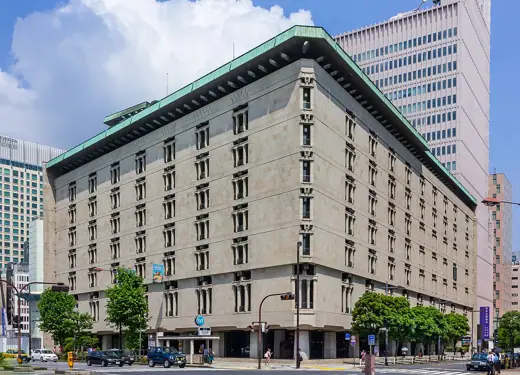 Nissay Theatre (Nippon Life Hibiya Building)1963 · Tokyo
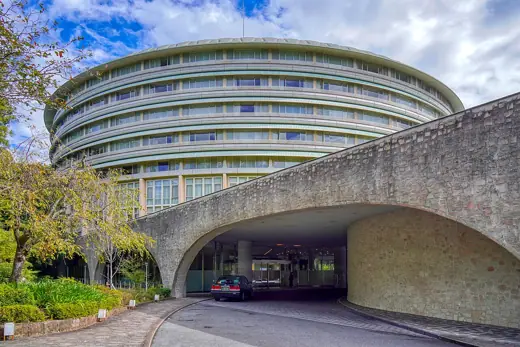 The Prince Kyoto Takaragaike (Kyoto Takaragaike Prince Hotel)1986 · Kyoto