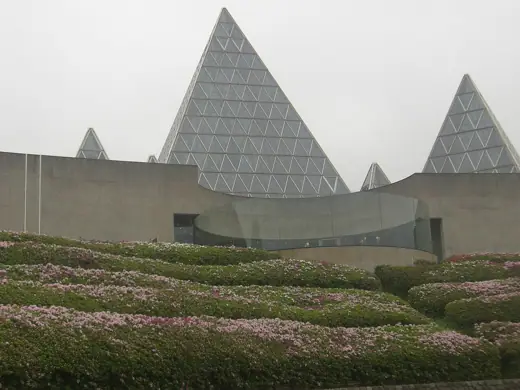
Shin Takamatsu (born 1948) is a Japanese architect from Nima, in Shimane Prefecture, known for futuristic designs that often borrow anthropomorphic or mechanical imagery. He graduated from Kyoto University in 1971, worked for Kiyoshi Kawasaki's office and opened his own practice in 1980, the year he completed his doctorate. His early buildings in Kyoto were small, strictly symmetrical, hard-edged and machine-like, and were read as part of Japanese post-modernism: Origin I (1981) won the Japan Institute of Architects' newcomer award in 1984, and Kirin Plaza in Osaka the Architectural Institute of Japan Prize in 1989. From about 1990, as his commissions grew larger, he turned to big glass volumes instead. He taught at Kyoto University from 1997 to 2013.
Read moreShow less
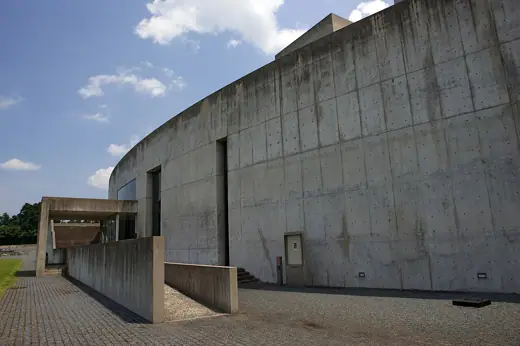
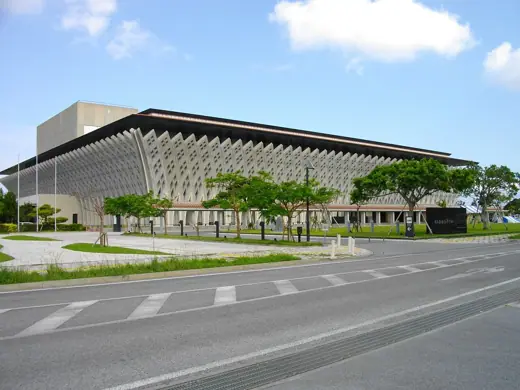
Back in his home region he designed the Nima Sand Museum (1990) in Shimane and, in neighbouring Tottori, the Shoji Ueda Museum of Photography (1995), for which he received the Minister of Education's Art Encouragement Prize in 1996. The National Theatre Okinawa in Urasoe (2003) belongs to his later, larger public work, alongside the Tianjin Museum in China (2004), which he won in an international competition.