McKim, Mead & White was an American architecture firm based in New York City that came to define the ideals of the American Renaissance around 1900. Its founding partners were Charles Follen McKim (1847–1909), William Rutherford Mead (1846–1928), and Stanford White (1853–1906). Their work applied Beaux-Arts principles of classical design, drawing and proportion, and after 1893 the ideas of the City Beautiful movement. White was murdered in 1906, McKim died in 1909 and Mead retired in 1919, but later partners carried the firm on until 1961, with buildings across the United States and in Canada, Cuba and Italy.
Read moreShow less
McKim's design for the Boston Public Library, McKim Building (1895) won the firm a new circle of institutional clients. The Morgan Library & Museum in New York (1906), built in marble as the private library of the banker J. P. Morgan, followed. The Manhattan Municipal Building (1914) was one of the last works of the City Beautiful in New York, and the James A. Farley Building (Moynihan Train Hall) (1914), a post office fronted by twenty Corinthian columns 16 metres tall, stood beside their original Pennsylvania Station.
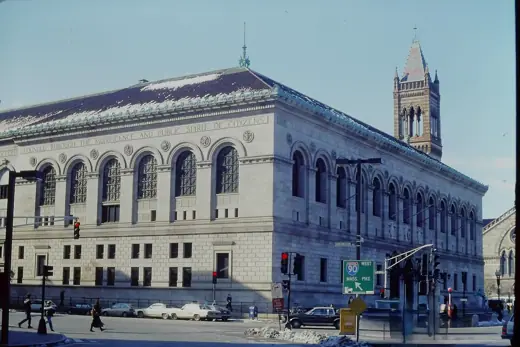 Boston Public Library, McKim Building1895 · Boston
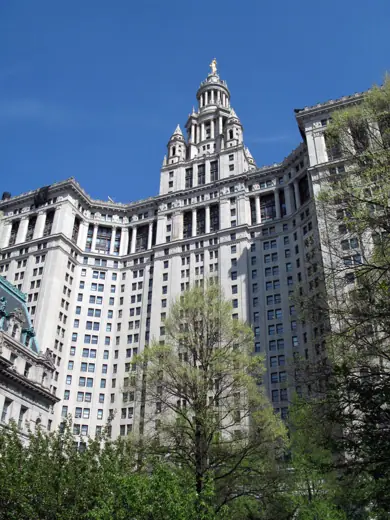 Manhattan Municipal Building1914 · New York
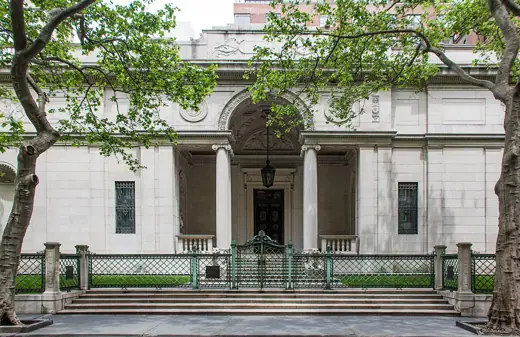 The Morgan Library & Museum1906 · New York
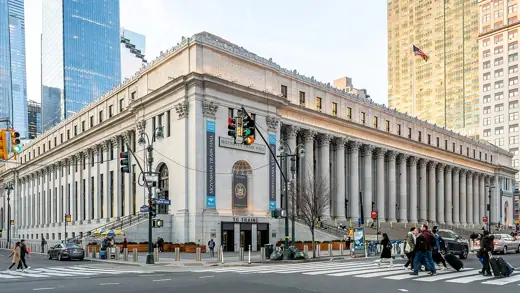 James A. Farley Building (Moynihan Train Hall)1914 · New York City
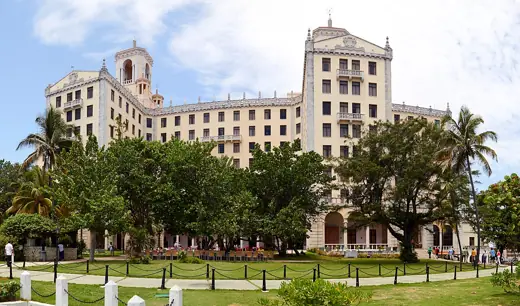 Hotel Nacional de Cuba1930 · Havana