Gunnar Asplund (1885–1940) was a Swedish architect, a leading figure of Nordic Classicism in the 1920s and then of the modernism that broke through in Sweden at the Stockholm Exhibition of 1930, for which he and Sigurd Lewerentz were the main architects. Its glass-and-steel entry pavilion, though temporary, was influential far beyond Sweden. From 1931 he was professor of architecture at the Royal Institute of Technology in Stockholm, marking his appointment with the lecture "Our architectonic concept of space". Alvar Aalto regarded him as a mentor, and he is often called the most important Swedish modernist architect.
Read moreShow less
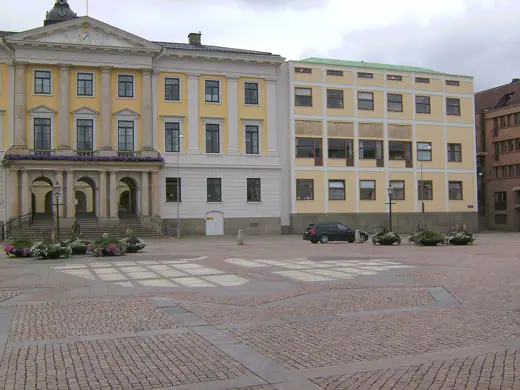
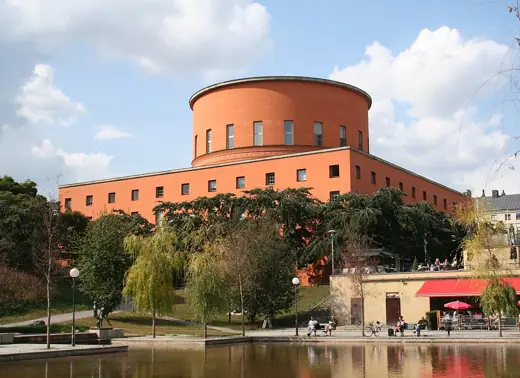
The Stockholm Public Library (1928), the model work of Nordic Classicism, gathers its reading room in a tall cylindrical rotunda, partly inspired by Claude-Nicolas Ledoux, over a square base, and influenced Aalto's Viipuri Library. His long work on the Gothenburg Law Courts Extension (1937), begun in 1913, records his own change from neo-classical to functionalist architect. With Lewerentz he created the Woodland Cemetery in Stockholm (1940), shaped between 1914 and 1940 and now a UNESCO World Heritage Site; its Woodland Crematorium, finished in the year of his death, is considered his finest work.