Junzo Sakakura (1901–1969) was a Japanese architect and one of the important members of the modernist movement in Japan. Born in Gifu Prefecture, he studied art history at Tokyo Imperial University and in 1930 joined Le Corbusier's atelier in Paris, rising during seven years there from job architect to chief of the studio. His Japanese Pavilion for the 1937 Paris Exposition, a grey box on black pilotis with ramps and a free plan, won the exhibition's Grand Prix. Back in Japan he founded his own practice, and with Kunio Maekawa and Takamasa Yoshizaka he carried out Le Corbusier's National Museum of Western Art in Tokyo (1959).
Read moreShow less
His first major building in Japan, the Museum of Modern Art, Kamakura (Kamakura Bunkakan Tsurugaoka Museum) (1951), lifts a white box of galleries on thin steel pilotis beside a lake in the grounds of the Tsurugaoka Hachiman Shrine, over a ground floor of Oya stone. Civic and commercial buildings followed: Hashima City Hall (1959), the Yokohama Silk Center (1959) and the Kure City Hall and Municipal Auditorium (1962). Junzo Sakakura's buildings are studied for Le Corbusier's ideas carried into post-war Japan.
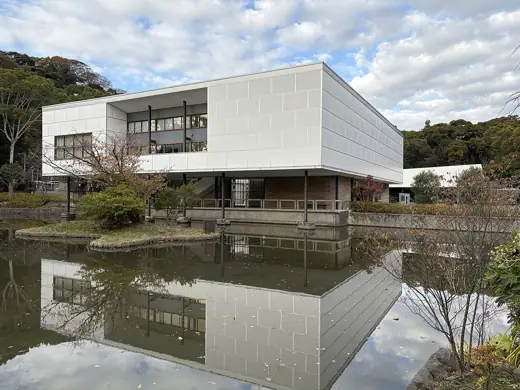 Museum of Modern Art, Kamakura (Kamakura Bunkakan Tsurugaoka Museum)1951 · Kamakura
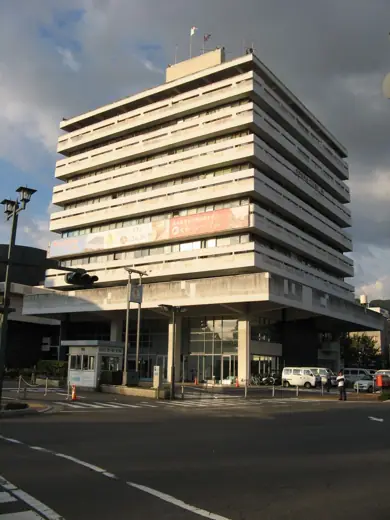 Kure City Hall and Municipal Auditorium1962 · Kure
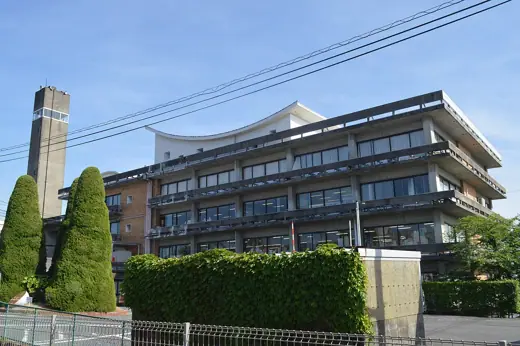 Hashima City Hall (1959)1959 · Hashima
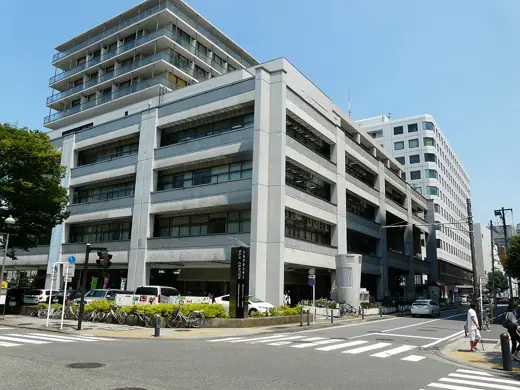 Yokohama Silk Center1959 · Yokohama
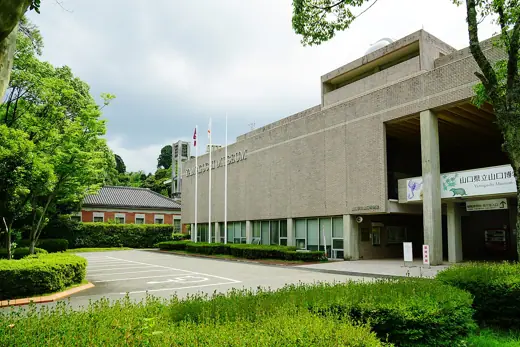 Yamaguchi Prefectural Museum1967 · Yamaguchi