João Batista Vilanova Artigas (1915–1985) was a Brazilian modernist architect, counted among the most important figures in the architecture of São Paulo and the founding figure of the Paulista School. Born in Curitiba, he graduated from the Polytechnic School of the University of São Paulo in 1937, and received a Guggenheim Fellowship in 1946. A member of the Brazilian Communist Party, he was removed from his teaching post in 1969, as was Paulo Mendes da Rocha, and both were reinstated in the 1980s.
Read moreShow less
His work is usually seen in three phases: early houses influenced by Frank Lloyd Wright, a move to the International Style with curtain walls and pilotis after 1945, and from the 1960s a dramatic personal style linked to brutalism for large public buildings. The Edifício Louveira (1949), a housing complex, and the Second Artigas House (Residência Vilanova Artigas II) (1949), his own home, belong to the second phase. The Morumbi Stadium (Estádio Cícero Pompeu de Toledo) (1970) is marked by the city as a monument of Brazilian modernism, and the FAU-USP Building (1969), for the university's architecture school, is one of the main works of Brazilian modernism.
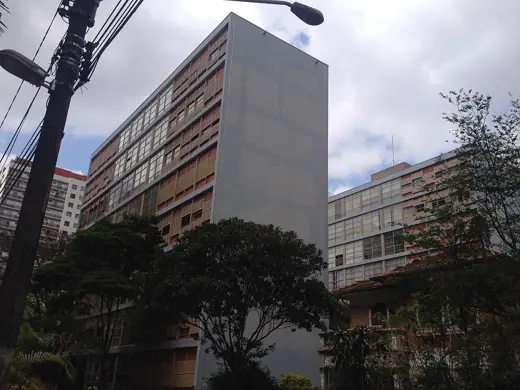 Edifício Louveira1949 · São Paulo
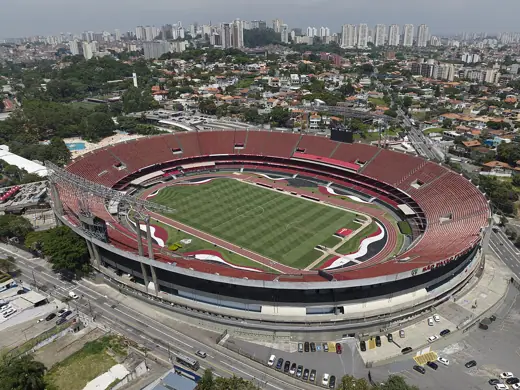 Morumbi Stadium (Estádio Cícero Pompeu de Toledo)1970 · São Paulo
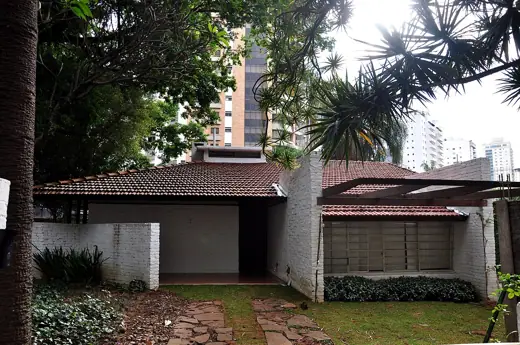 Second Artigas House (Residência Vilanova Artigas II)1949 · São Paulo
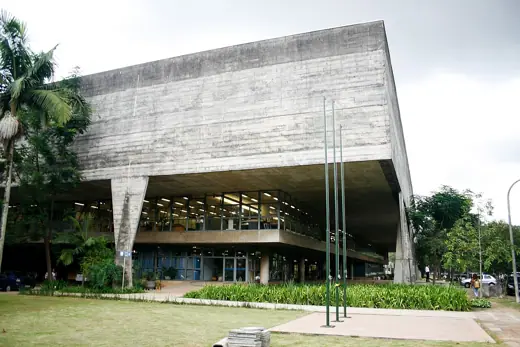 FAU-USP Building1969 · São Paulo
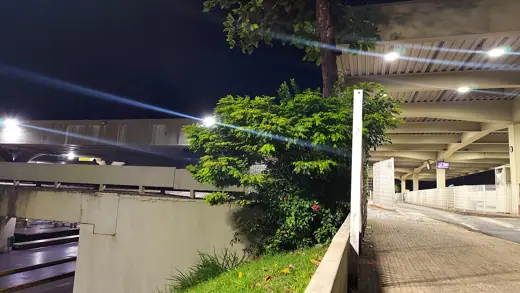 Jaú Bus Station1973 · Jaú