Houshang Seyhoun (1920–2014) was an Iranian architect, sculptor, painter and teacher who became famous in the 1950s for tombs of Iran's poets and scholars. He studied architecture at the University of Tehran under André Godard and Maxime Siroux, then at the École des Beaux-Arts in Paris, where he finished in 1948 with a design for Avicenna's mausoleum at Hamadan. As dean of the University of Tehran's College of Fine Arts from 1961 he added Iran's historic architecture to the teaching. He believed that a good architect must, like a poet, be simple. After the Iranian Revolution he lived in exile in Vancouver.
Read moreShow less
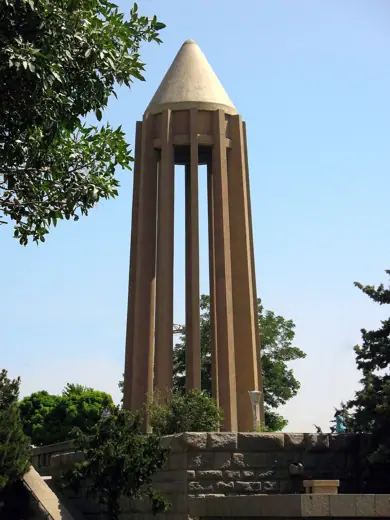
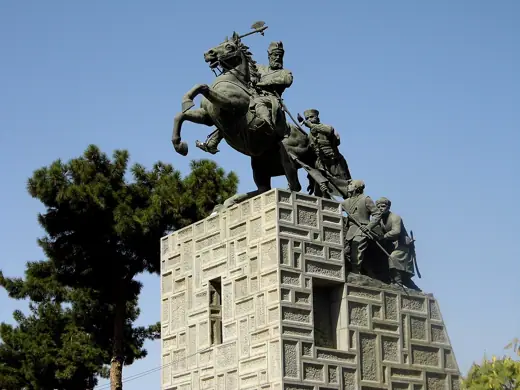
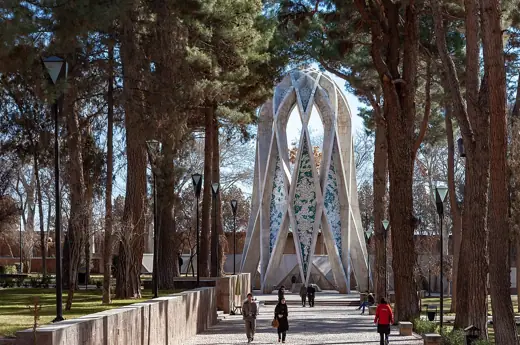
Built after his competition win, the Avicenna Mausoleum in Hamadan (1954) rises as a spindle-shaped tower 28 metres high, inspired by the Ziyarid-era Kavus Tower. The Tomb of Nader Shah in Mashhad (1959) holds the grave of the ruler. The Omar Khayyam Mausoleum in Nishapur (1963), a white marble monument over the poet's grave, draws on Khayyam's work as poet, mathematician and astronomer, and a path from the garden lets blossoms fall on the tomb each spring, as Khayyam had wished.