Hermann Henselmann (1905–1995) was a German architect best known for his buildings in East Germany in the 1950s and 1960s. Born in Roßla, he studied at the Kunstgewerbeschule in Berlin; his early houses were modernist, with a clear Bauhaus influence, and because of this and his partly Jewish ancestry the Nazi government barred him from private practice. After the war he stayed in East Berlin, persuaded by his friend Bertolt Brecht. He turned to Socialist Realism, designing the towers at each end of the Stalinallee, now Karl-Marx-Allee, then returned to modernism after Stalin's death. He was chief architect of Berlin from 1953 and retired in 1972.
Read moreShow less
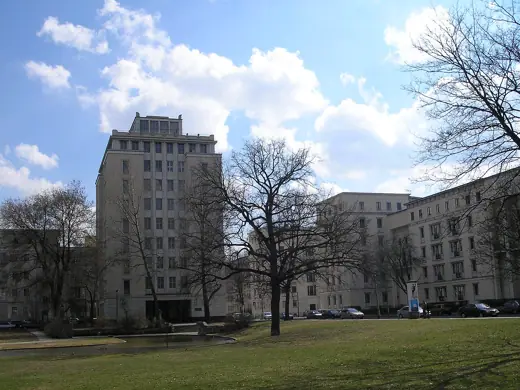
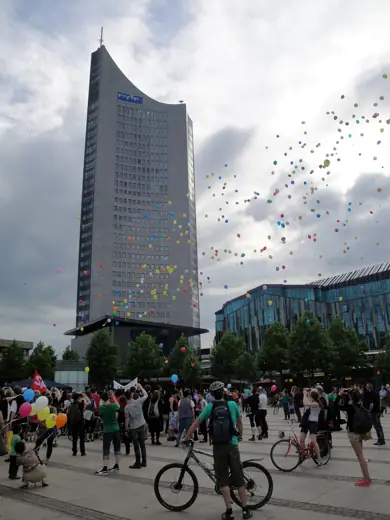
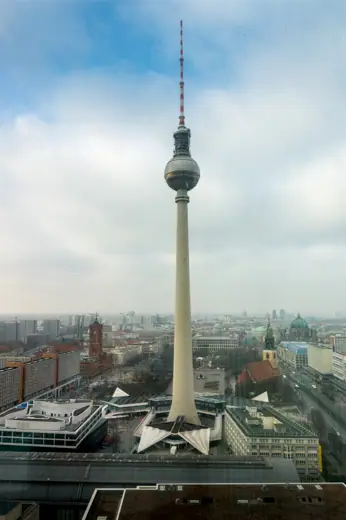
The Hochhaus an der Weberwiese in Berlin (1952), a block of flats, was the first example of socialist classicism in East Germany. Plans for a "Signal Tower" that he drafted in 1958 became early designs for the Fernsehturm Berlin (1969), 368 metres high with its antenna and the tallest structure in Germany. The City-Hochhaus Leipzig (1972), built for the University of Leipzig in the shape of an open book, is at 142.5 metres the city's tallest multistorey building.