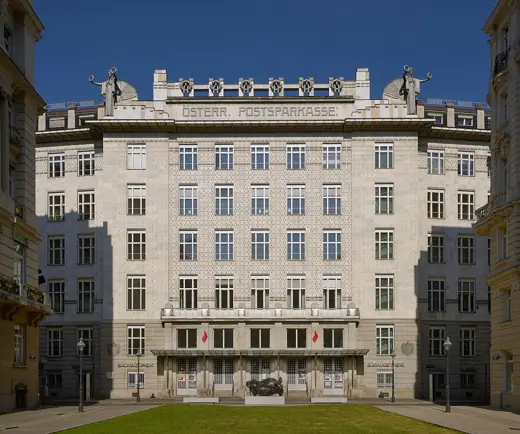
Otto Wagner (1841–1918) was an Austrian architect, furniture designer and urban planner, a leading member of the Vienna Secession and the wider Art Nouveau movement. Born in Penzing, Vienna, he trained in Vienna and in Berlin under a student of Karl Friedrich Schinkel, and spent his early career building in revival styles along the Ringstrasse. In Modern Architecture (1896) he wrote that "only that which is practical can be beautiful". As professor at the Vienna Academy of Fine Arts he taught students including Josef Hoffmann and Rudolph Schindler.
Read moreShow less
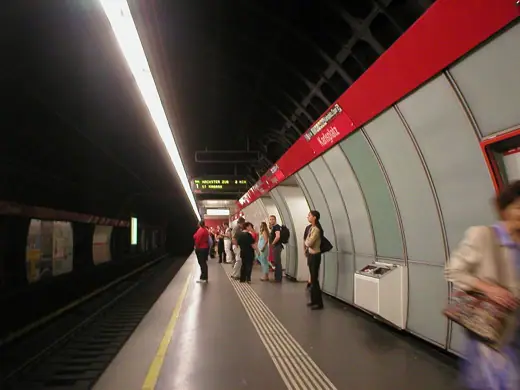
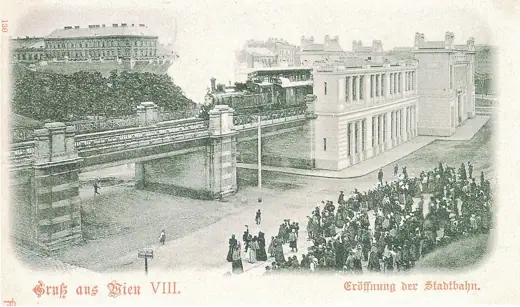
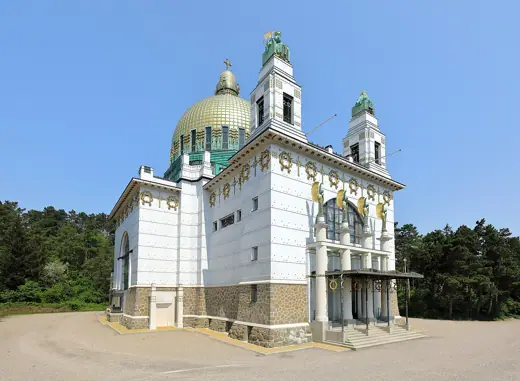
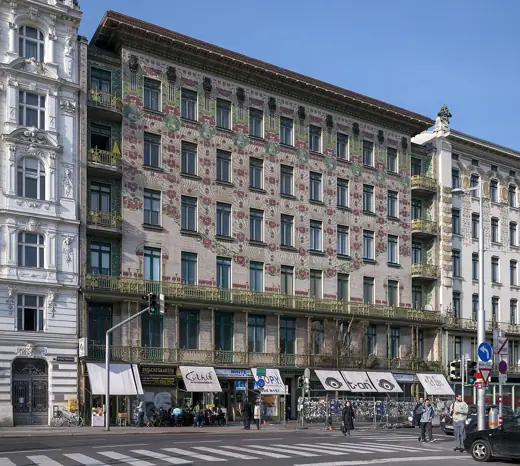
From 1894 he was artistic director of the Vienna Stadtbahn (1901), the city railway, designing its bridges, viaducts and stations down to the lamps and signs. The Karlsplatz Stadtbahn Pavilions (1899), a pair of metal-framed pavilions faced in marble with gilded sunflower patterns, are its best-known stations. The Majolikahaus (1899) wraps a block of flats in glazed tiles with floral designs. In his later works the ornament became geometric: the Austrian Postal Savings Bank (1906) fixes marble slabs with aluminium rivets that are purely decorative, and the Kirche am Steinhof (1907) crowns a psychiatric hospital.