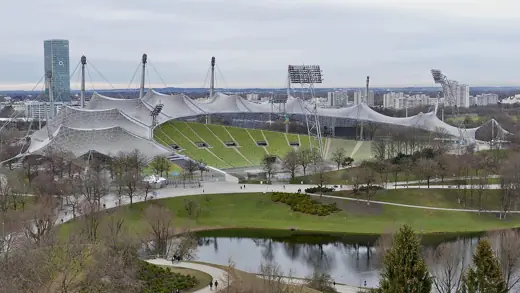
Frei Otto (1925–2015) was a German architect and structural engineer known for lightweight structures, above all tensile and membrane roofs such as the one over the Munich Olympic Stadium. Born in Siegmar and raised in Berlin, he studied architecture there before serving as a pilot in the Second World War; in a prisoner-of-war camp near Chartres, short of materials, he began experimenting with tents as shelter. He opened his own practice in 1952, and in 1964 founded the Institute for Lightweight Structures at the University of Stuttgart. He received the Pritzker Prize in 2015; he died the day before it was announced.
Read moreShow less
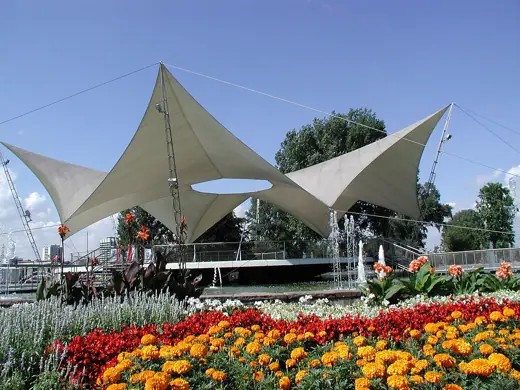
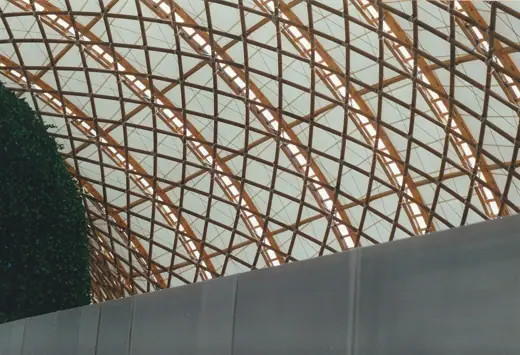
His early tent pavilions included the Tanzbrunnen (Star Wave Tent) in Cologne's Rheinpark (1957). After the West German pavilion at Expo 67 in Montreal, designed with Rolf Gutbrod, he designed the vast cable-net and acrylic roof of the Munich Olympic Stadium (1972) with Günter Behnisch. The Multihalle Mannheim (1975) followed. With Shigeru Ban and Buro Happold he worked on the Japan Pavilion, Expo 2000 in Hanover (2000), whose roof is made entirely of paper. Frei Otto's work is studied for doing the most with the least material.