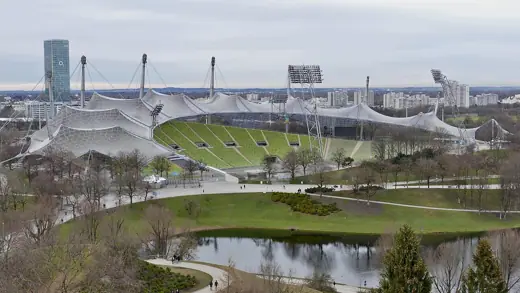
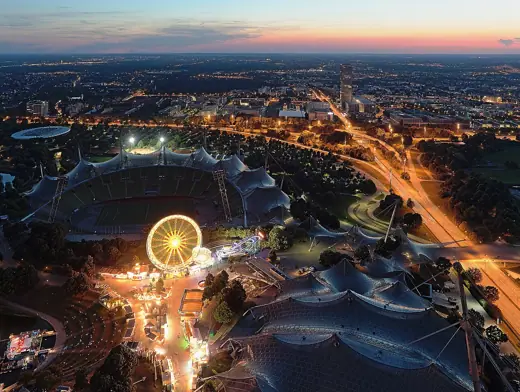
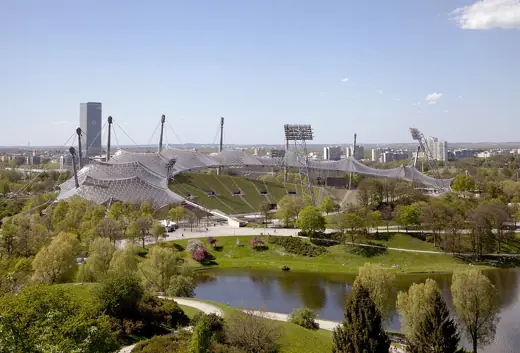
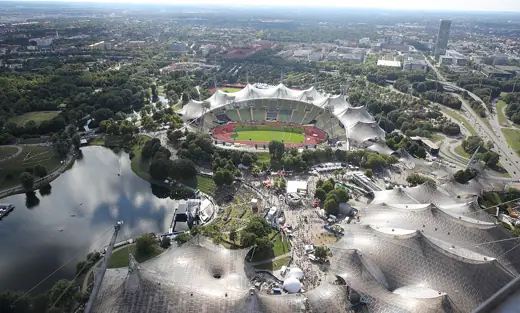
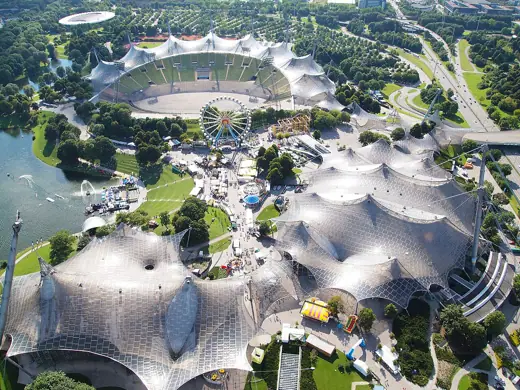
Olympiastadion (German pronunciation: [ʔoˈlʏmpi̯aːˌʃtaːdi̯ɔn] ) is a stadium located in Munich, Germany. Situated at the heart of the Olympiapark München in northern Munich, the stadium was built as the main venue for the 1972 Summer Olympics.
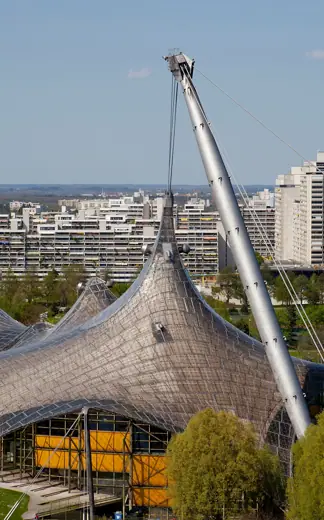
Designed by the German architect Günther Behnisch and the engineer Frei Otto, with the assistance of John Argyris, the lightweight tent construction of the Olympiastadion was considered revolutionary for its time. This included large sweeping canopies of acrylic glass stabilized by steel cables that were used for the first time on a large scale. The idea was to imitate the Alps skyline and to set a counterpoint to the 1936 Summer Olympics in Berlin, held during the Nazi regime. The sweeping and transparent canopy was designed to symbolize the new, democratic and optimistic West Germany. This concept was reflected in the official motto: "The cheerful Games" ("Die Heiteren Spiele").
During the Olympics 70,824 tickets—including the unsaleable—were available for the events taking place in the stadium (including the opening and closing ceremonies). Yet, during the track and field competitions,