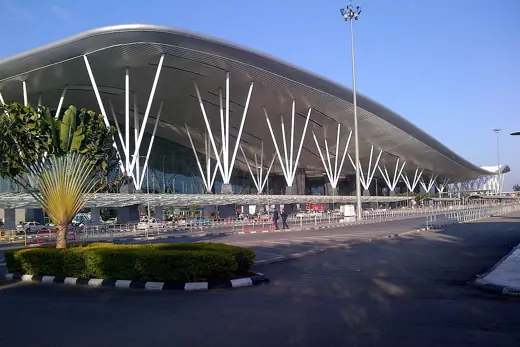
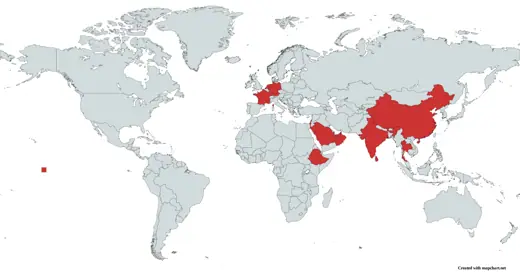
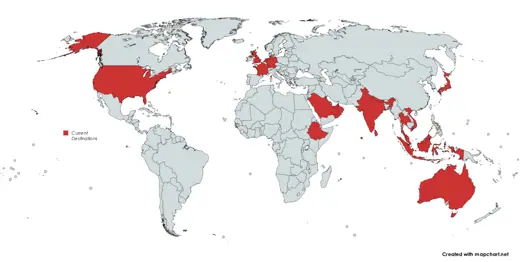
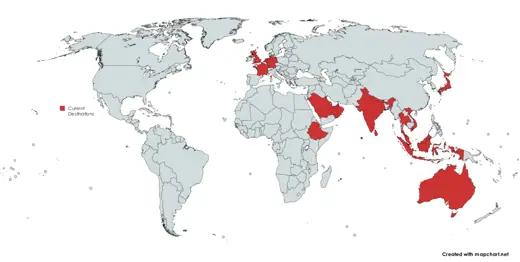
1/6 · Exterior · Bengaluru airportPhoto: sarang · CC0 · source2/6 · Exterior · Bangalore Airport Cargo DestinationsPhoto: BytesDAL · CC0 · source3/6 · Exterior · List of countries you can fly to with direct flights from Kempegowda International AirportPhoto: Minas Giannekas · CC BY-SA 4.0 · source4/6 · Exterior · Countries you can fly to from Kempegowda International AirportPhoto: AvgeekSK · CC BY-SA 4.0 · source5/6 · Interior · Glass Curtain Wall of Kempegowda International airport, BengaluruPhoto: iMahesh · CC BY-SA 4.0 · source6/6 · Interior · Pavilion on a coffee shop in Kempegowda International airport, BengaluruPhoto: iMahesh · CC BY-SA 4.0 · source
Infrastructure · Contemporary
Kempegowda International Airport Terminal 2
Skidmore, Owings & Merrill · Bengaluru, India · 2022
Key featuresA terminal set in gardens, with bamboo-clad ceilings and hanging plants through the halls.
Kempegowda International Airport (IATA: BLR, ICAO: VOBL) is an international airport serving Bengaluru, the capital of the Indian state of Karnataka. Spread over 16 square kilometres (6.2 sq mi), it is located about 35 km (22 mi) north of the city, near the suburb of Devanahalli. It is owned and operated by Bengaluru International Airport Limited (BIAL), a public–private consortium. The airport opened in May 2008, as an alternative to the increasingly congested HAL Airport, the original commercial airport serving the city. It is named after Kempe Gowda I, the founder of Bengaluru. It is Karnataka's first fully solar powered airport, developed by CleanMax Solar.
When the project was initiated, BIAL anticipated traffic of approximately 5 million passengers per annum in the first few years of operations. However, the scale of air traffic growth in the city meant that the figure was already breached by 2008. It took more than 9 months to redesign the project and gain permission for expansion. By the time the approvals for the reworked project were sanctioned, construction was half completed. Despite the challenges, BIAL expected the airport to be operational by the initially proposed date of completion.












.png)


