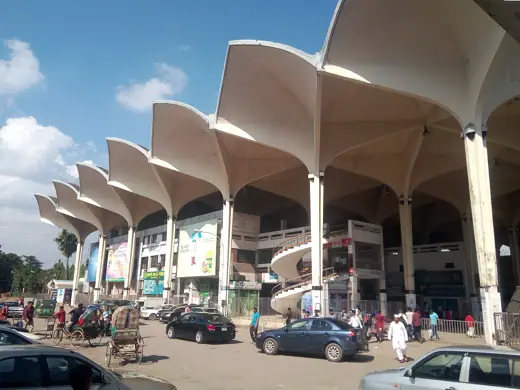
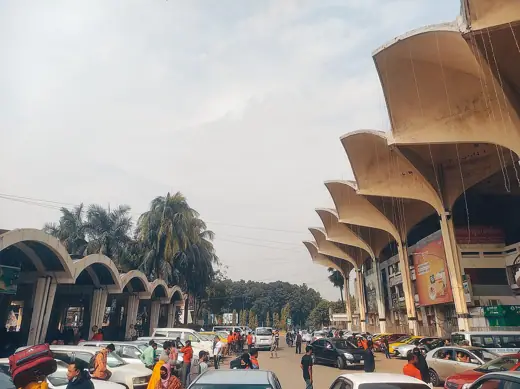
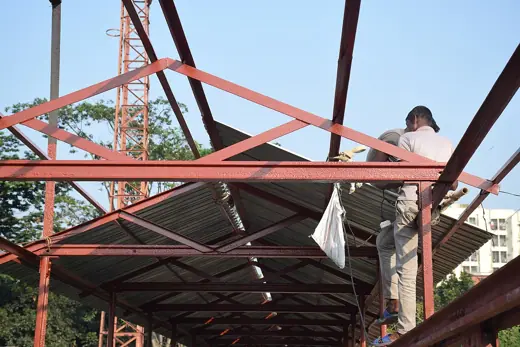
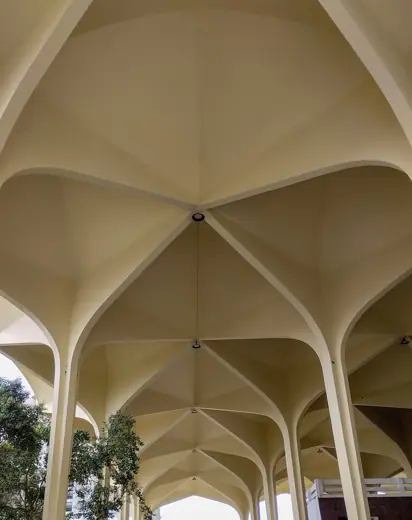
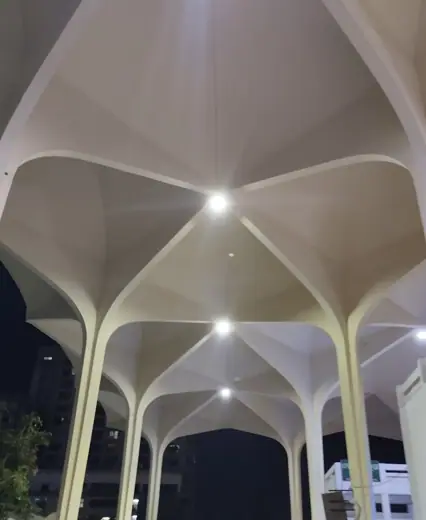
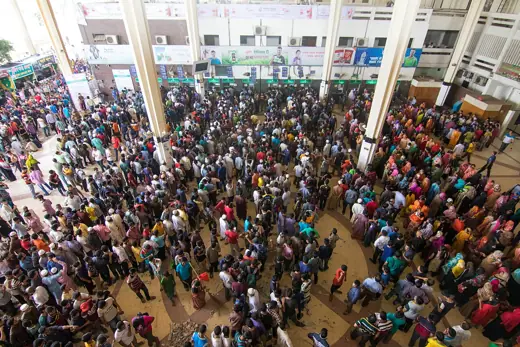
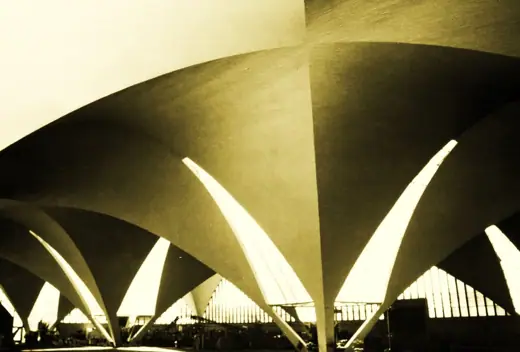
1/6 · Exterior · This is a photo of a monument in Bangladesh identified by the IDPhoto: Anik Sarker · CC BY-SA 4.0 · source2/6 · Exterior · This is a photo of a monument in Bangladesh identified by the IDPhoto: Showrov1007 · CC BY-SA 4.0 · source3/6 · Exterior · Komolapur Railway Station is Located in DhakaPhoto: Frameofashik · CC BY-SA 4.0 · source4/6 · Interior · Uploaded by wasiPhoto: Wasiul Bahar · CC BY-SA 4.0 · source5/6 · Interior · Entrance architecture of Kamalapur railway stationPhoto: Wasiul Bahar · CC BY-SA 4.0 · source6/6 · Interior · This is a photo of a monument in Bangladesh identified by the IDPhoto: Azim Khan Ronnie · CC BY-SA 4.0 · source
Infrastructure · Modernism
Kamalapur railway station
Robert Boughey, Daniel Dunham · Dhaka, Bangladesh · 1968
Key featuresRow of thin concrete umbrella shells forms a shading canopy over an open concourse.
Kamalapur Railway Station, officially Dhaka Railway Station, is the central railway station in Kamalapur, Dhaka, capital of Bangladesh. It is the largest station and the busiest infrastructure for transportation in the country that acts as a gateway to the country's capital. It was opened on 1 May 1968.
The architects of Kamalapur railway station were two Americans: Daniel Dunham and Bob Buie. Both came to East Pakistan as architects with the Louis Berger Group. The design process started under the direction of Dunham, followed by Robert Boughey.
Dunham & Buie's design included the creation of a wide-span structure that would be suitable for the climate of the region, a challenge to them. For that, they designed a concrete structure for the station building roof that was unusual; the structure had a parasol roof. The roof shelters a row of downward-facing interconnected structures. The terminal's profile – a rhythmic arrangement of gently tapered and arched shells evokes the typical image of a tropical climate, with an umbrella providing protection from monsoon rains. The design of the station includes various functional spaces, including the station's ticket booth, administrative offices, passenger rest areas, and waiting areas under an integrated canopy roof.