Shigeru Ban (born 1957) is a Japanese architect known for building with paper, above all recycled cardboard tubes, and for quick, low-cost shelters for people who have lost their homes in disasters. He studied at Cooper Union in New York under John Hejduk, founded the Voluntary Architects' Network in 1995 to build temporary buildings after disasters and conflicts, and won the Pritzker Prize in 2014 for his use of materials and his humanitarian work.
Read moreShow less
The Paper Dome (Paper Church), a church of paper tubes put up in 1995 after the Great Hanshin earthquake, was later rebuilt in Puli, Taiwan. For the Japan Pavilion, Expo 2000, in Hanover, he worked with Frei Otto and the engineers Buro Happold on a 72-metre gridshell of paper tubes. The Centre Pompidou-Metz (2010) is covered by a 90-metre hexagonal roof of laminated timber woven like the cane of a Chinese hat. After the 2011 earthquake in Christchurch, New Zealand, his Cardboard Cathedral (2013) gave the city a transitional church built from more than 90 large cardboard tubes, timber and steel. Shigeru Ban's projects are studied for low-waste materials and for serving people in crisis.
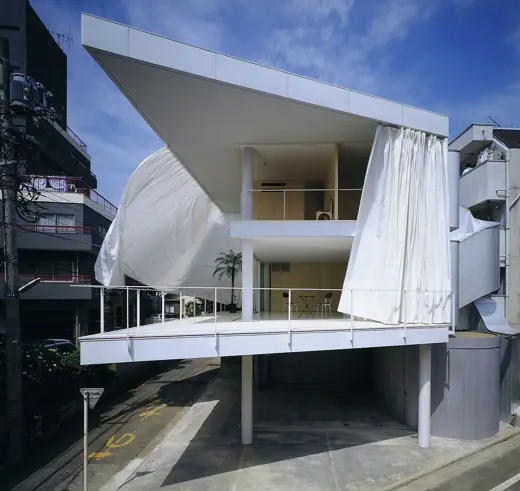 Curtain Wall House1995 · Tokyo
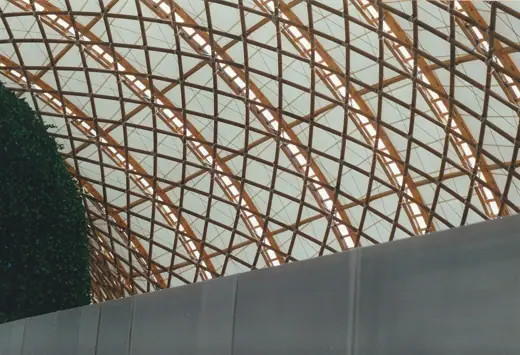 Japan Pavilion, Expo 20002000 · Hanover
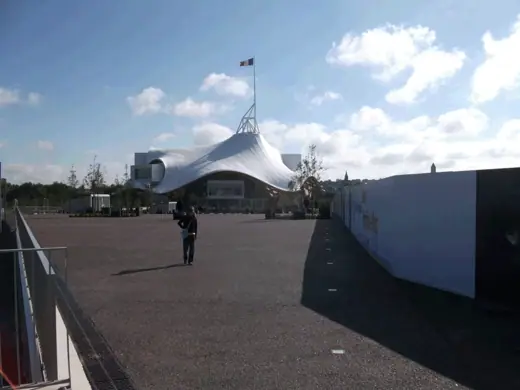 Centre Pompidou-Metz2010 · Metz
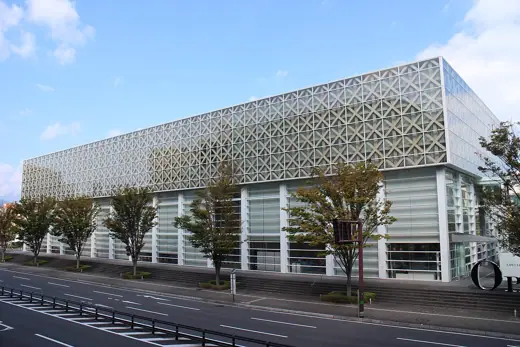 Oita Prefectural Art Museum2015 · Oita
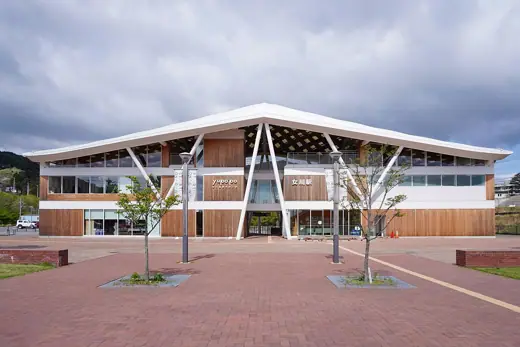 Onagawa Station2015 · Onagawa
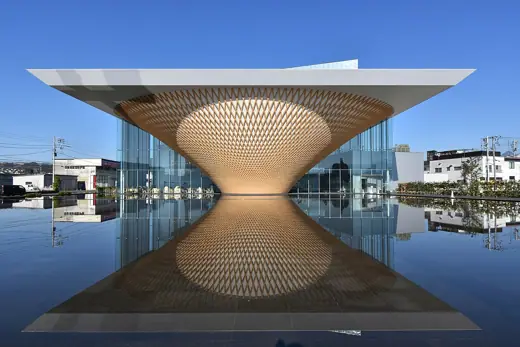 Mt. Fuji World Heritage Centre, Shizuoka2017 · Fujinomiya
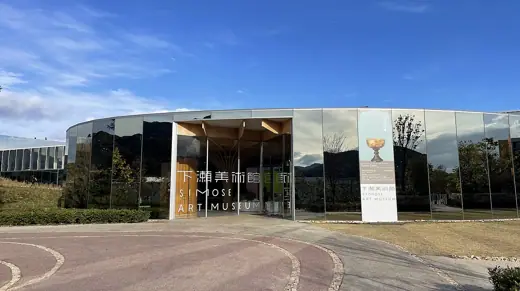 Simose Art Museum2023 · Otake
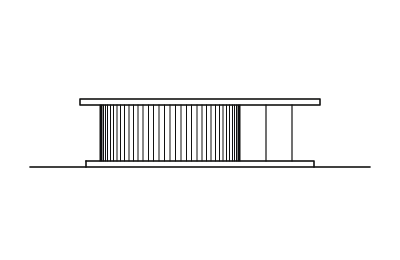 Paper House1995 · Yamanakako
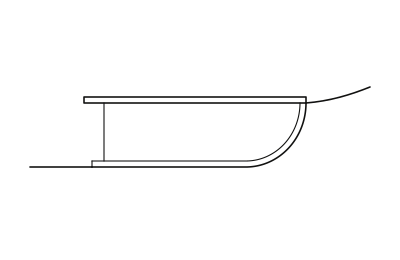 Wall-less House1997 · Karuizawa
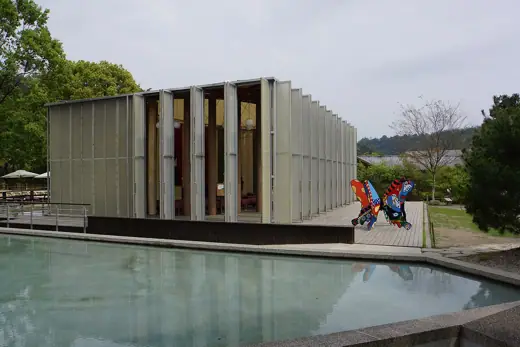 Paper Dome (Paper Church)2008 · Puli
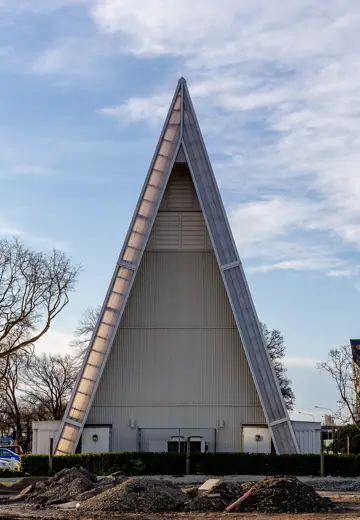 Cardboard Cathedral2013 · Christchurch
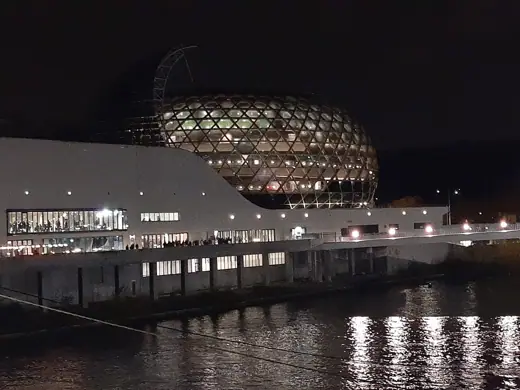 La Seine Musicale2017 · Boulogne-Billancourt
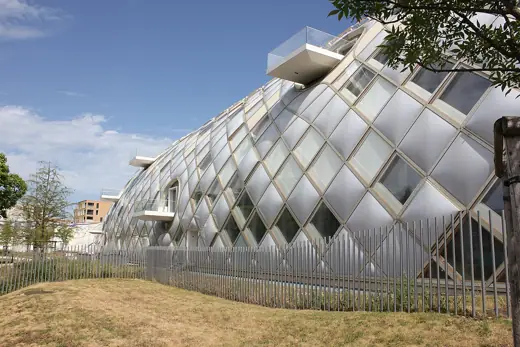 Swatch Headquarters, Biel2019 · Biel/Bienne