J. J. P. Oud (1890–1963) was a Dutch architect who first became known as a member of the De Stijl movement. Born in Purmerend, he was influenced by H. P. Berlage, and while working with Willem Dudok in Leiden met Theo van Doesburg. From 1918 to 1933 he was municipal housing architect for Rotterdam, designing progressive workers' housing in districts such as Spangen, Kiefhoek and the Witte Dorp, and he described his aim of reconciling cheap, rational building with the needs of residents as "poetic functionalism". By 1932 he was counted with Mies van der Rohe, Gropius and Le Corbusier among the four greatest modern architects.
Read moreShow less
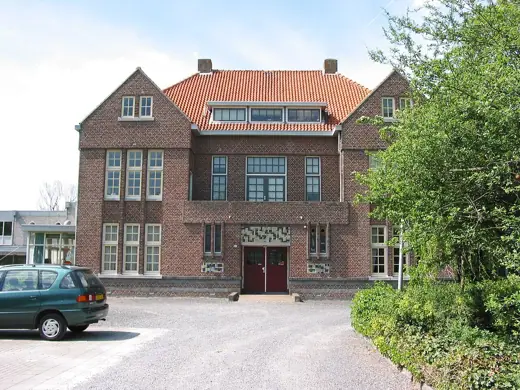
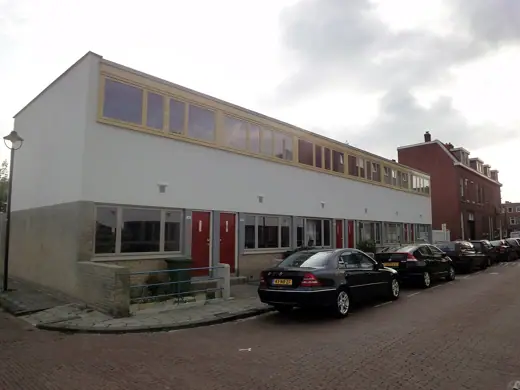
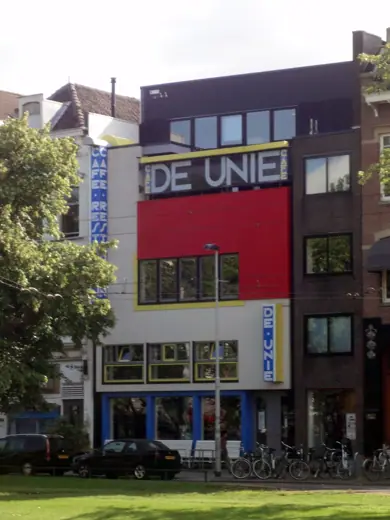
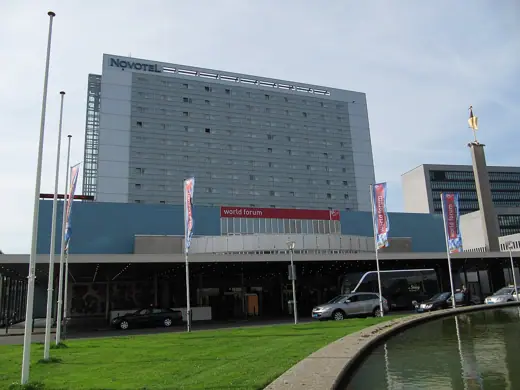
De Vonk in Noordwijkerhout (1918), on which he worked with Van Doesburg, belongs to his De Stijl years, and the Café De Unie in Rotterdam (1925) followed. The Kiefhoek estate in Rotterdam (1930) is one of his best-known workers' housing schemes. After the war he moved away from De Stijl and took an individual stand against mainstream modernism, designing the National Monument on Dam Square in Amsterdam and, in The Hague, the World Forum (Congress Building) (1969).