Hans Scharoun (1893–1972) was a German architect from Bremen and an important figure of organic and expressionist architecture. In 1919 he joined Bruno Taut's expressionist group, the Glass Chain, and the theories of Hugo Häring later took him in a new direction. He stayed in Germany through the Nazi years, building only a few family houses, and several of his most important buildings were finished after his death.
Read moreShow less
Villa Schminke in Löbau (1933), one of those houses, is open to the public. After the war, the Geschwister-Scholl-Schule in Lünen (1962) was planned like a small city. The Berliner Philharmonie (1963), home of the Berlin Philharmonic and considered his best work, places the orchestra podium near the centre, with the audience rising around it on irregular terraces under ceilings layered like a tent. The Berlin State Library (Haus Potsdamer Straße) (1978), the Scharoun Theatre Wolfsburg (1973) and the German Maritime Museum (Scharoun building) in Bremerhaven (1975) were all completed after he died. Hans Scharoun's buildings are studied for the way each space is shaped by its use.
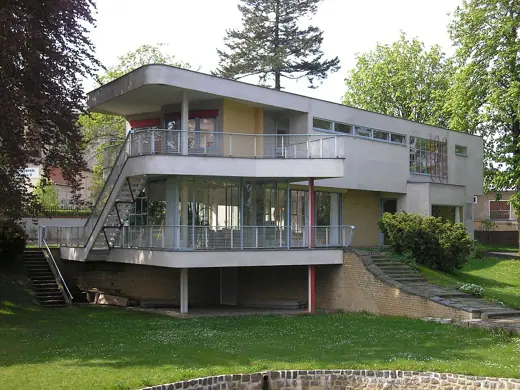 Villa Schminke1933 · Lobau
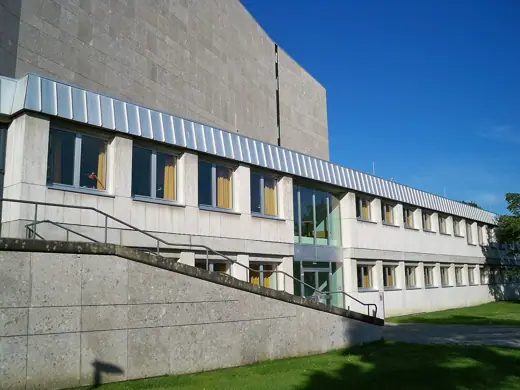 Scharoun Theatre Wolfsburg1973 · Wolfsburg
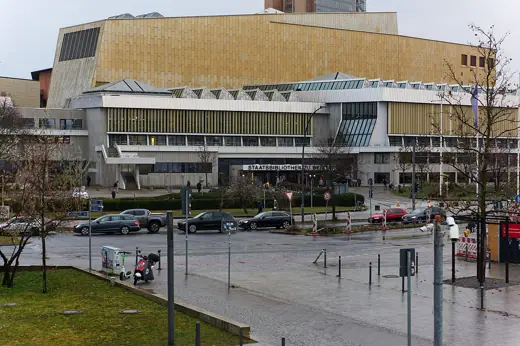 Berlin State Library (Haus Potsdamer Straße)1978 · Berlin
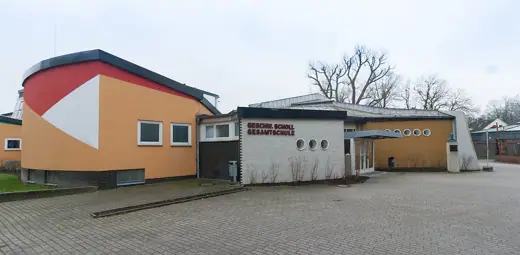 Geschwister-Scholl-Schule1962 · Lünen
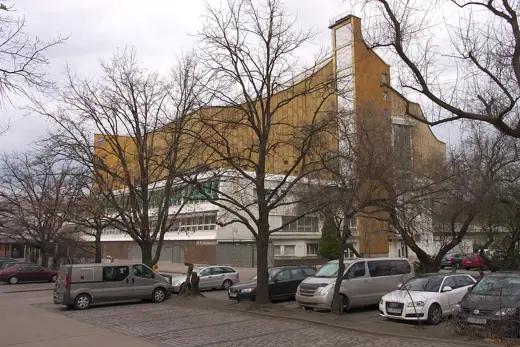 Berliner Philharmonie1963 · Berlin
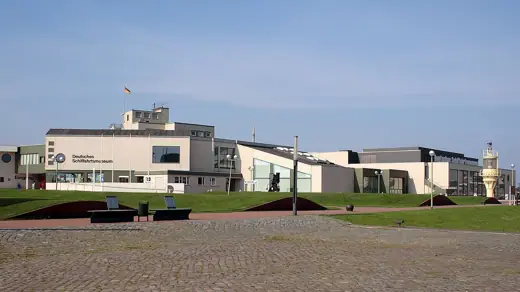 German Maritime Museum (Scharoun building)1975 · Bremerhaven
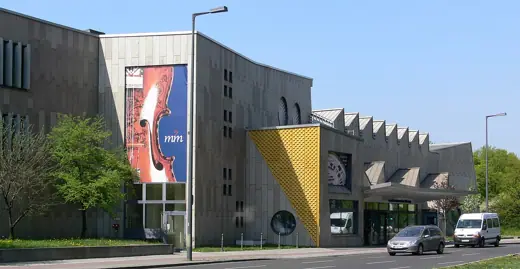 Berlin Musical Instrument Museum1984 · Berlin