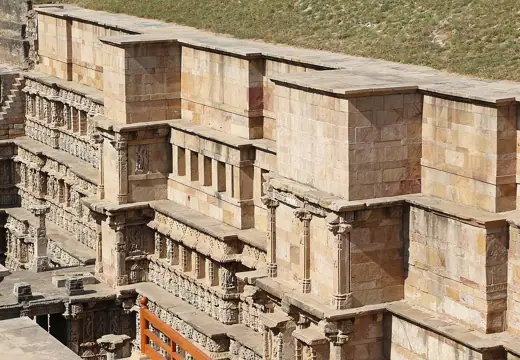
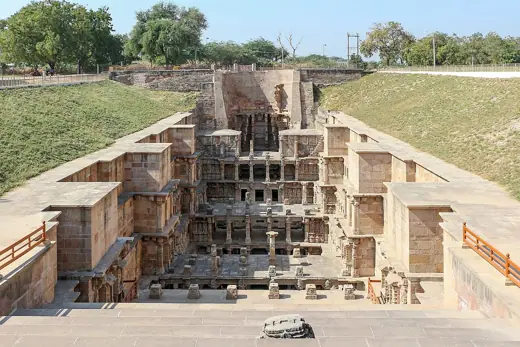
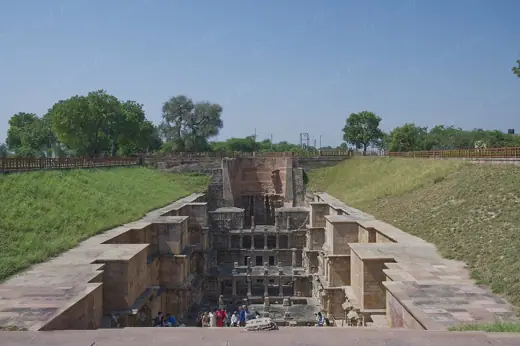
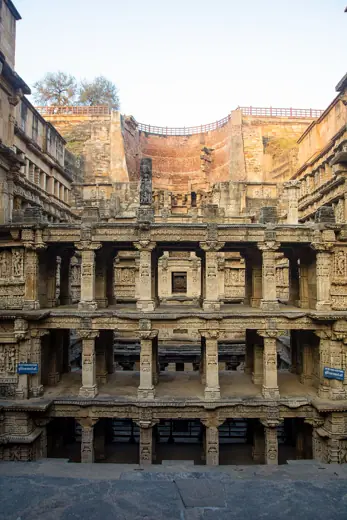
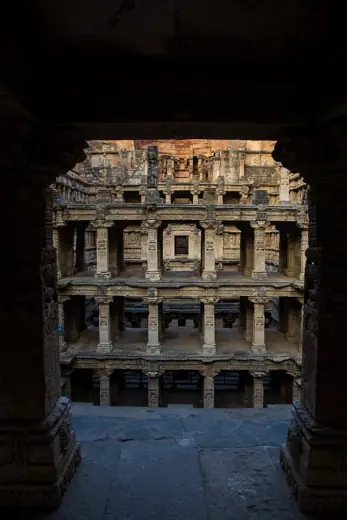
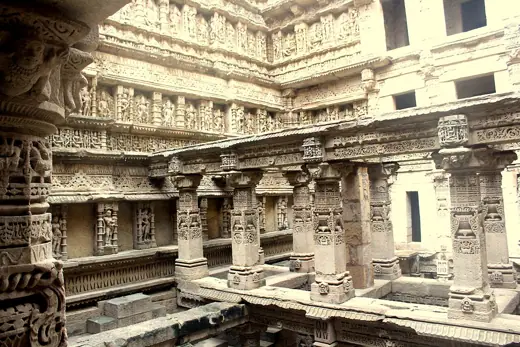
1/6 · Exterior · Rani ki vav, Patan, IndiaPhoto: Bernard Gagnon · CC BY-SA 3.0 · source2/6 · Exterior · Rani ki vav, Patan, IndiaPhoto: Bernard Gagnon · CC BY-SA 3.0 · source3/6 · Exterior · Inverted temple like structure of Rani ki VavPhoto: Drashokk · CC BY-SA 4.0 · source4/6 · ExteriorPhoto: Bhuppigraphy · CC BY-SA 4.0 · source5/6 · InteriorPhoto: Bhuppigraphy · CC BY-SA 4.0 · source6/6 · Interior · Rani ki vav is an intricately constructed stepwell situated in the town of Patan in Gujarat, IndiaPhoto: Bibhas87 · CC BY-SA 4.0 · source
Infrastructure · Historic precedent
Rani ki Vav
Chaulukya builders · Patan, India · c. 1063
Key featuresA stepwell descending seven levels through carved stone galleries to the water table.
Rani ki Vav (lit. 'The Queen's Stepwell') is a stepwell situated in the town of Patan in Gujarat, India. It is located on the banks of the Saraswati River. Its construction is attributed to Udayamati, the spouse of the 11th-century Chaulukya king Bhima I. Silted over, it was rediscovered in the 1940s and restored in the 1980s by the Archaeological Survey of India. It has been listed as a UNESCO World Heritage Sites in India since 2014. The stepwell is designed as an underground shrine or inverted temple symbolizing the sanctity of water, with sculptures depicting numerous Hindu deities. It is divided into seven stair levels, each with sculptural panels. These panels contain more than 500 principal sculptures and over a thousand minor ones, combining religious, secular, and symbolic imagery.
Rani ki vav is considered to be one of the finest and largest examples of stepwell architecture in Gujarat. It was built at the height of artisans’ expertise in stepwell construction and in the Maru-Gurjara architecture style, reflecting mastery of this complex technique and the beauty of its detail and proportions. The architecture and sculptures are similar to the Vimalavasahi temple on Mount Abu and Sun temple at Modhera.