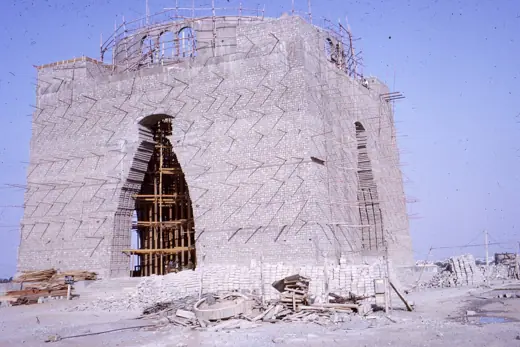
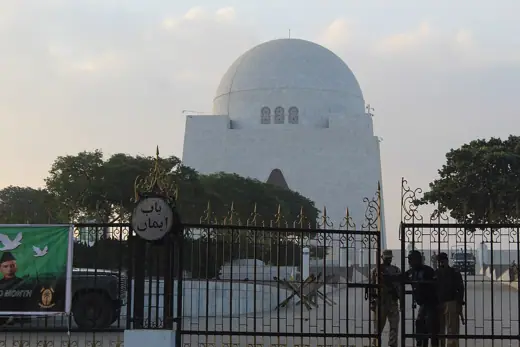
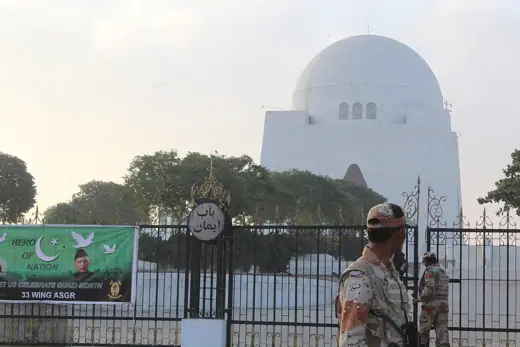
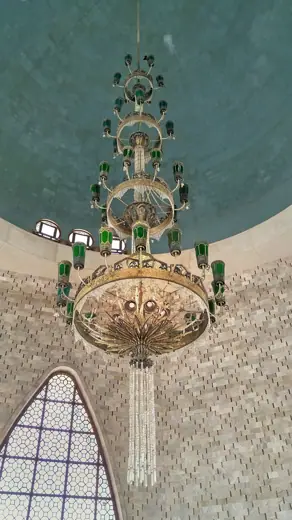
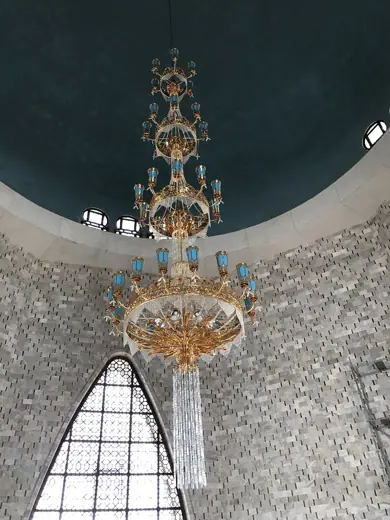
1/6 · ExteriorPhoto: John Standish Fforde · CC BY-SA 4.0 · source2/6 · Exterior · this is a mazar e quaidPhoto: Aghasaad06 · CC BY-SA 4.0 · source3/6 · Exterior · this is a mazar e quaidPhoto: Aghasaad06 · CC BY-SA 4.0 · source4/6 · Exterior · This is a photo of a monument in Pakistan identified as thePhoto: Ibrahim Janjua · CC BY-SA 4.0 · source5/6 · Interior · This is a photo of a monument in Pakistan identified as thePhoto: Ibrahim Janjua · CC BY-SA 4.0 · source6/6 · Interior · This is a photo of a monument in Pakistan identified as thePhoto: Junaidkureshi · CC BY-SA 4.0 · source
Memorial · Modernism
Mazar-e-Quaid
Yahya Merchant · Karachi, PK · 1970
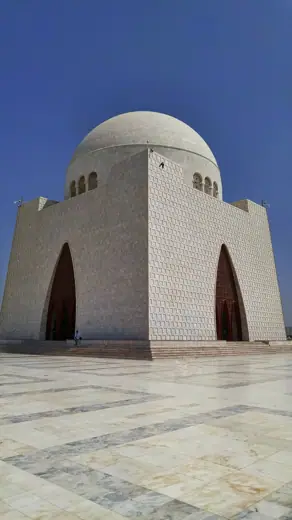
Key featuresA white marble cube with pointed arches and a shallow dome, raised on a platform in a large park.
Mazar-e-Quaid (Urdu: مزارِ قائد, lit. 'Tomb of the Leader'), also known as Jinnah Mausoleum or the National Mausoleum, is the final resting place of Muhammad Ali Jinnah, the founder of Pakistan. Designed in a traditional style with a minor influence of modernist style, it was completed in 1971, and is an iconic symbol of Karachi alongside being one of the most popular tourist sites in the city. The mausoleum complex also contains the tomb of Jinnah's sister, Māder-e Millat ("Mother of the Nation") Fatima Jinnah; as well as those of Liaquat Ali Khan and Nurul Amin, the first and eighth prime ministers respectively.
The mausoleum was designed in a traditional style with a minor influence of modernist style popular during the 1960s and 1970s, and has been termed a "traditional monument of a modernist period." It appears simple at a distance, but "exuberant in its use of material and complex in its detailing when viewed" closely. The use of white marble to suggest purity, and pure geometric forms, are designed to portray Jinnah as a larger-than-life figure. The location and style of the monument both serve to inspire passersby.


,_under_construction-_1964.jpg)


