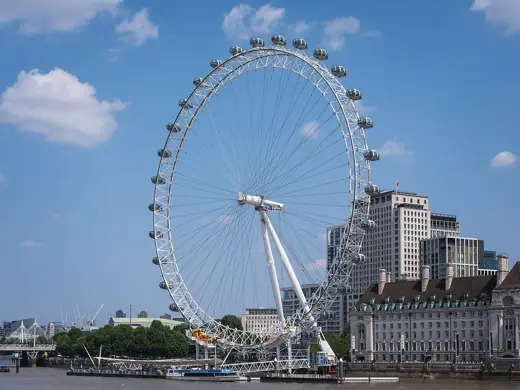
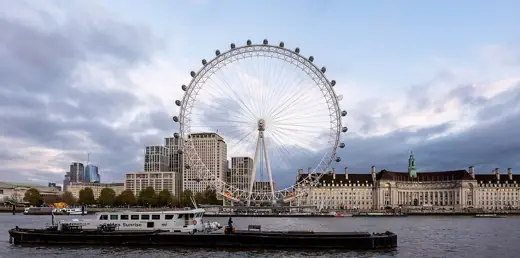
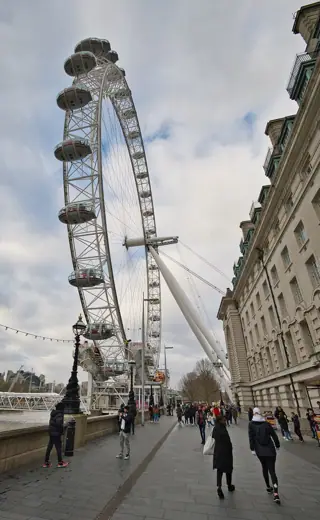
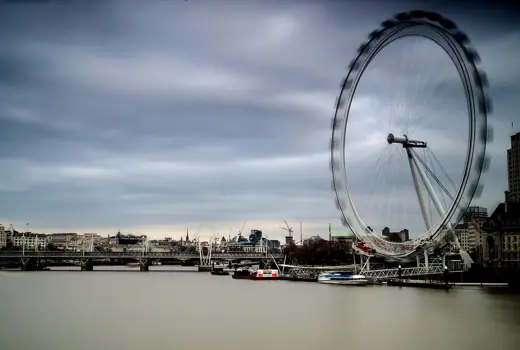
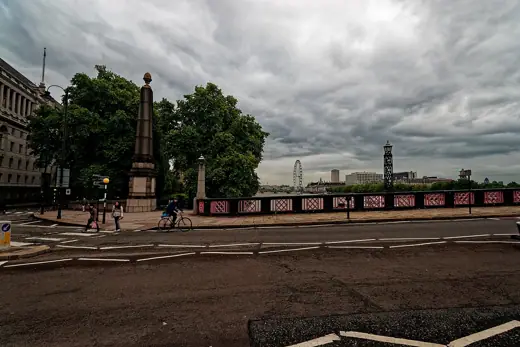
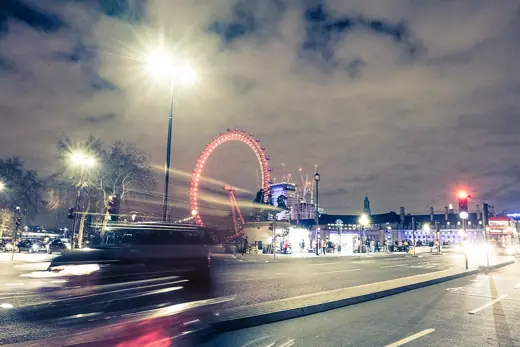
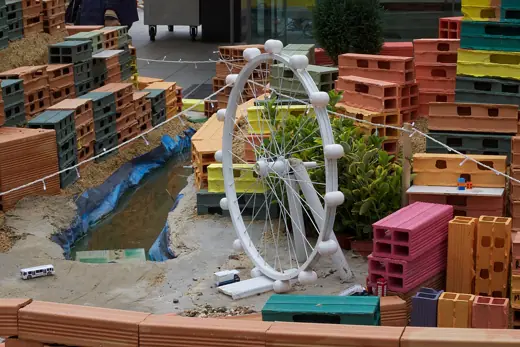
1/7 · Interior · The London Eye and County Hall seen from the north bank of the River Thames, Lambeth, London, EnglandPhoto: Christian David · CC BY-SA 4.0 · source2/7 · ExteriorPhoto: Rhododendrites · CC BY-SA 4.0 · source3/7 · Exterior · In London, United KingdomPhoto: chris.rycroft · CC BY 2.0 · source4/7 · Exterior · Just me, my Sony SLT-A58, a tripod, some lenses, some filters and no kids!Photo: Phil Dolby · CC BY 2.0 · source5/7 · InteriorPhoto: Txllxt TxllxT · CC BY-SA 4.0 · source6/7 · InteriorPhoto: Carlos Reusser Monsalvez from Santiago, Chile · CC0 · source7/7 · ModelPhoto: cogdogblog · CC BY 2.0 · source
Infrastructure · High-tech
London Eye
Marks Barfield · London, GB · 2000
Key featuresCantilevered observation wheel held by an A-frame and cables, its rim spoked like a bicycle wheel.
The London Eye, originally the Millennium Wheel, is a cantilevered observation wheel on the South Bank of the River Thames in London. It is the world's tallest cantilevered observation wheel, and the most popular paid tourist attraction in the United Kingdom with more than three million visitors annually. It has been featured numerous times in popular culture.
The rim of the Eye is supported by tensioned steel cables and resembles a huge spoked bicycle wheel. The lighting was re-done with LED lighting from Color Kinetics in December 2006 to allow digital control of the lights as opposed to the manual replacement of gels over fluorescent tubes.
Mace was responsible for construction management, with Hollandia as the main steelwork contractor and Tilbury Douglas as the civil contractor. Consulting engineers Tony Gee & Partners designed the foundation works while Beckett Rankine designed the marine works.
The wheel was constructed in sections which were floated up the Thames on barges and assembled lying flat on piled platforms in the river. Once the wheel was complete it was lifted into an upright position by a strand jack system made by Enerpac. It was first raised at 2 degrees per hour until it reached 65 degrees, then left in that position for a week while engineers prepared for the second phase of the lift.



.jpg)

.jpg)

.jpg)
.jpg)