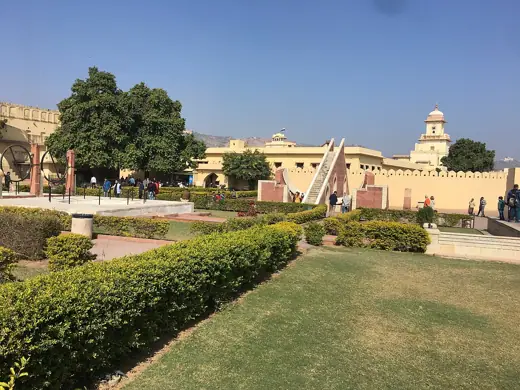
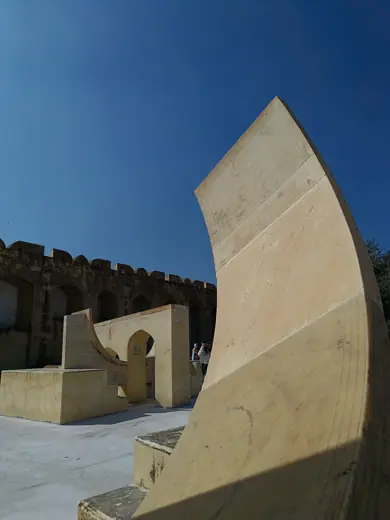
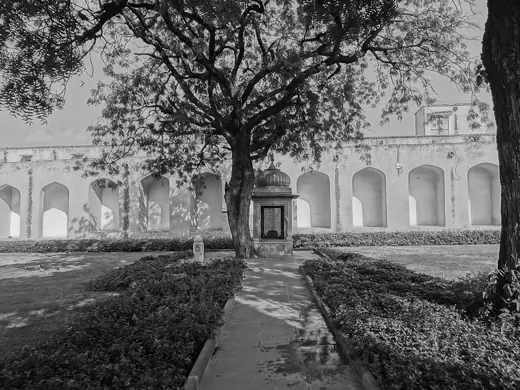
1/7 · Exterior · Jantar Mantar astronomical observatory in JaipurPhoto: Jakub Hałun · CC BY-SA 4.0 · source2/7 · Exterior · Jantar Mantar, Jaipur 2014Photo: Neeraj Menon · CC BY 4.0 · source3/7 · ExteriorPhoto: Thomas Fuhrmann · CC BY-SA 4.0 · source4/7 · ExteriorPhoto: Thomas Fuhrmann · CC BY-SA 4.0 · source5/7 · Exterior · Immense mathematical skill is required to understand the applications of Jantar MantarPhoto: Vabinik · CC BY-SA 4.0 · source6/7 · Interior · Jantar Mantar, the living clock of Jaipur is made up of numerous componentsPhoto: IVinaySrivastava · CC BY-SA 4.0 · source7/7 · InteriorPhoto: Shubh77901 · CC BY-SA 4.0 · source
Public space · Historic precedent
Jantar Mantar, Jaipur
Sawai Jai Singh II · Jaipur, India · c. 1734
Key featuresMasonry astronomical instruments at architectural scale, shaped to read the sun's shadow.
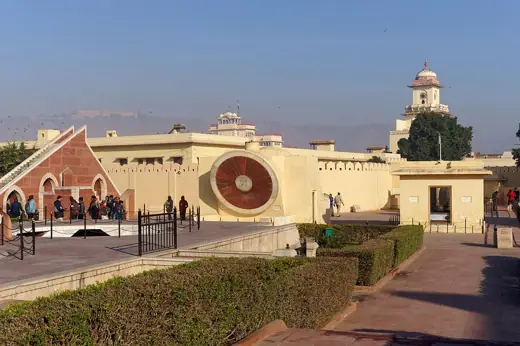
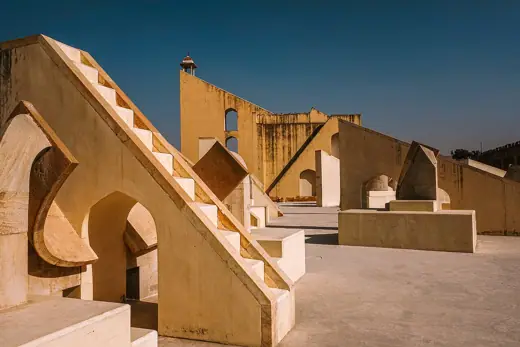
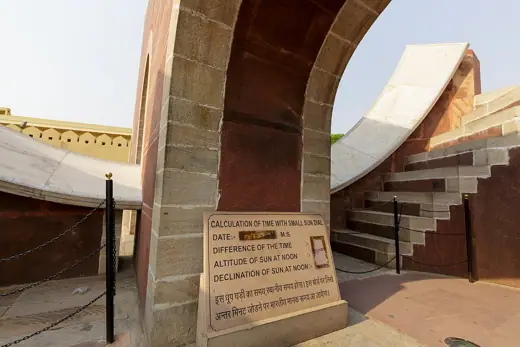
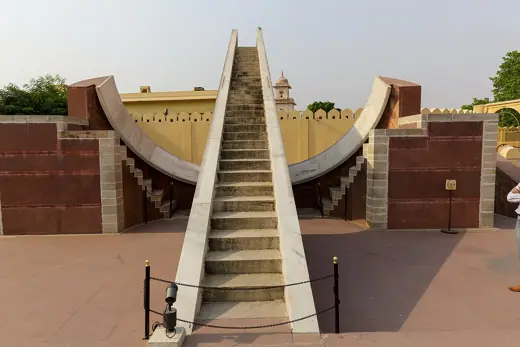
The Jantar Mantar is a collection of 19 astronomical instruments built by the Rajput king Sawai Jai Singh, the founder of Jaipur, Rajasthan, India. The monument was completed in 1734. It features the world's largest stone sundial, and is a UNESCO World Heritage Site. It is near City Palace and Hawa Mahal. The instruments allow the observation of astronomical positions with the naked eye. The observatory is an example of the Ptolemaic positional astronomy which was shared by many civilizations.