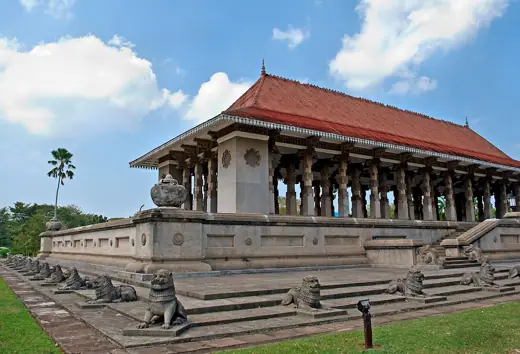
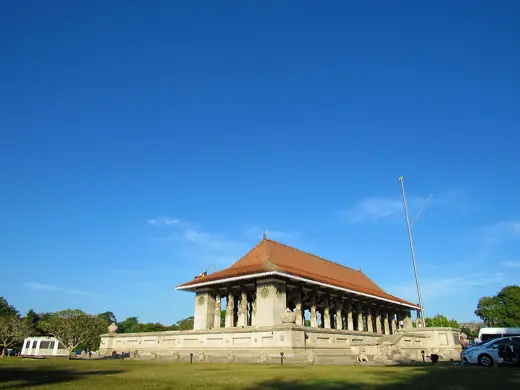
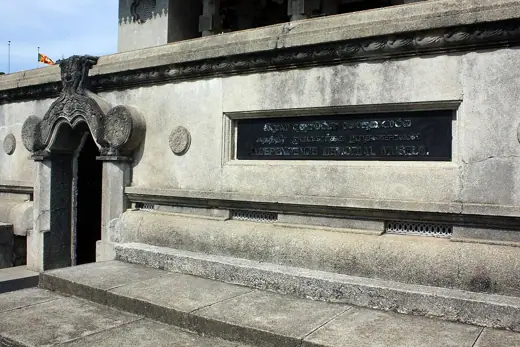
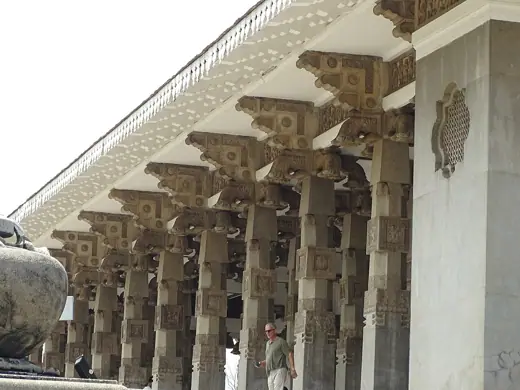
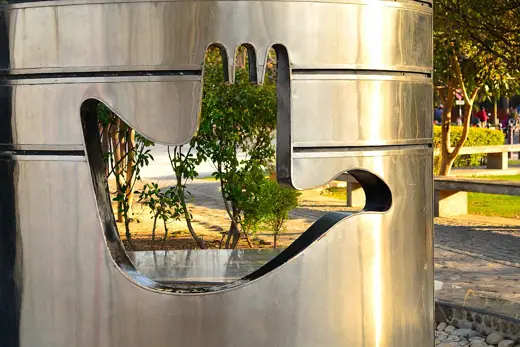
1/4 · Interior · Independence Commemoration Hall in Sri LankaPhoto: Charaka Ranasinghe · CC BY 2.0 · source2/4 · Interior · Sri Lanka Independence Square in the morningPhoto: Azeez Abubakr · CC BY-SA 4.0 · source3/4 · Interior · Entrance to Independence Memorial MuseumPhoto: AntanO · CC BY-SA 4.0 · source4/4 · Interior · Detail of the monument of independence in Colombo, Sri LankaPhoto: Ljuba brank · CC BY-SA 3.0 · source
Memorial · Regionalism
Independence Memorial Hall
Tom Neville Wynne-Jones · Colombo, Sri Lanka · 1953
Key featuresOpen pillared hall under a tiered Kandyan roof, modelled on a royal audience hall.
Independence Memorial Hall (also known as Independence Commemoration Hall) is a national monument in Sri Lanka built for the commemoration of the independence of Sri Lanka from British rule, with the restoration of full governing responsibility to a Ceylonese-elected legislature on 4 February 1948. It is located in Independence Square (formerly Torrington Square) in the Cinnamon Gardens, Colombo. It also houses the Independence Memorial Museum.
The building was designed by a group of eight notable architects led by Tom Neville Wynne-Jones CBE, and included F. H. Billimoria, Shirley de Alwis, Oliver Weerasinghe, Homi Billimoria, Justin Samarasekera, and M. B. Morina. The design of the building is based on the Magul Maduwa (Celebration Hall), the Royal audience hall of the Kingdom of Kandy the last native kingdom of the island, where on 5 March 1815 the Kandyan Convention was signed between the British and the Kandyian Chieftains (Radalas) ending the Kingdom of Kandy.
The monument was built at the location where the formal ceremony marking the start of self-rule, with the opening of the first parliament by Prince Henry, Duke of Gloucester occurred at a special podium on 4 February 1948.




_spomenik_neodvisnosti.jpg)