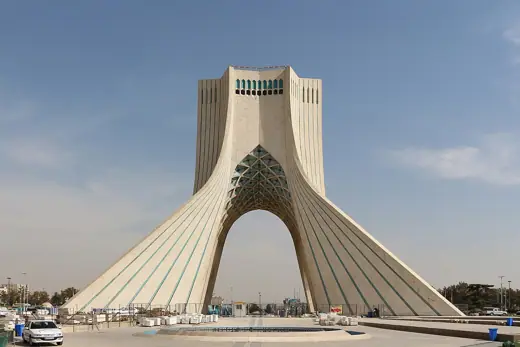
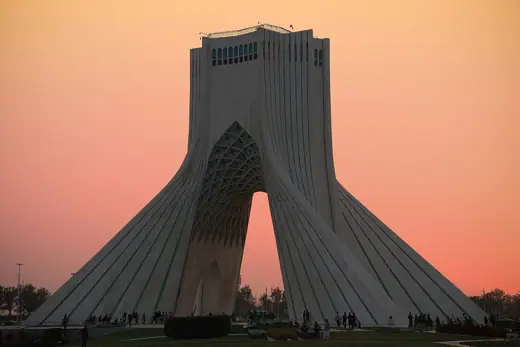
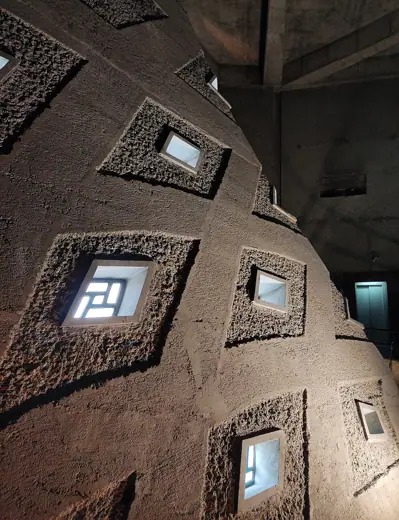
The Azadi Tower (Persian: برج آزادی, romanized: Borj-e Āzādi, lit. 'Freedom Tower'), also known by its former name, the Shahyad Tower (Persian: برج شهیاد, romanized: Borj-e Šahyād, lit. 'Shah's Memorial Tower'), is a monument at Azadi Square in Tehran, Iran. It is one of Tehran's landmarks, once marking the westernmost entrance to the city, and is part of the Azadi Cultural Complex, which also includes an underground museum.
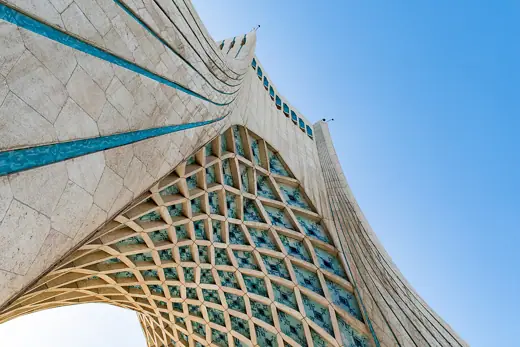
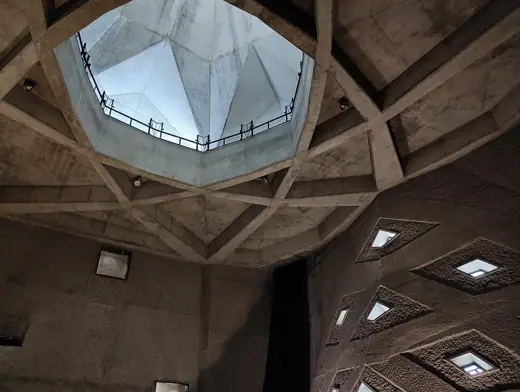
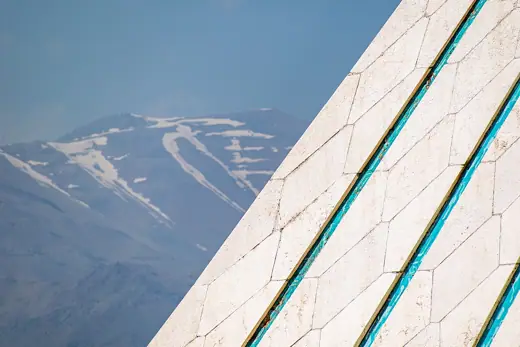
With a Persian-inspired architecture, the tower is about 45 metres (148 ft) tall and is completely clad in cut marble. It was commissioned by Mohammad Reza Pahlavi, the last Shah of Iran, to mark the 2,500-year celebration of the Persian Empire and was completed in 1971.
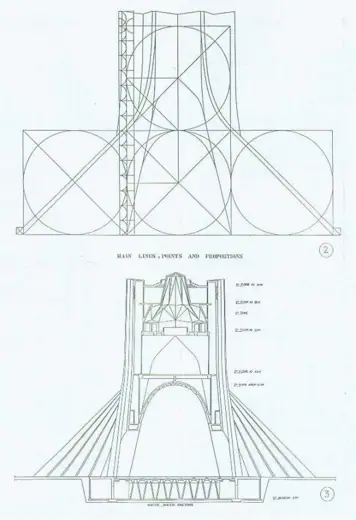
After winning a competition, architect Hossein Amanat was tasked to design the tower. His ideas were based upon Iran's classical and post-classical architecture, popular influences on art in the 1960s following the White Revolution.




.jpg)
%22_tower_full_view.jpg)
_-_03.jpg)
_-_05.jpg)
.jpg)
